
Access Essex County Property Tax Records
Essex County property tax records are held by the Commissioner of the Revenue and the Treasurer, both located in Tappahannock on the Northern Neck. These offices are responsible for all aspects of real estate taxation in the county, from setting assessed values on each parcel to collecting the annual tax bills. The records are public and can be accessed at the county offices or through any online tools the county makes available. Each record includes the owner name, parcel identification number, assessed land and improvement values, and tax payment history for all taxable real property in Essex County. Property owners, buyers, and title researchers can look up any parcel by visiting county offices during business hours or submitting a written request.
Essex County Overview
Commissioner of the Revenue
The Essex County Commissioner of the Revenue is the office responsible for assessing all real property in the county at fair market value. This obligation comes from Virginia Code § 58.1-3200, which sets 100% of market value as the statewide assessment standard. The Commissioner also handles personal property assessments, maintains parcel files, and administers tax exemption and relief programs for qualifying residents.
Essex County sits along the Rappahannock River in eastern Virginia. The county has a mix of rural farmland, waterfront properties along the river and its tributaries, residential lots, and small commercial properties centered around Tappahannock. Waterfront and water-access parcels often carry higher assessed values, and the Commissioner's office uses sales data from comparable waterfront sales when valuing those properties. Agricultural land may qualify for the land use taxation program, which can result in lower effective tax rates for qualifying parcels.
Each parcel's assessment file includes the owner name, parcel number, legal description, land value, improvement value, and total assessed value. When a property is sold and a deed is recorded with the Essex County Circuit Court Clerk, the Commissioner's office updates ownership records and may review the assessed value if the sale price differs meaningfully from the prior assessment.
Virginia's § 58.1-3330 requires the county to notify property owners when assessments change beyond a set threshold. If you get such a notice and want to understand the new value, the Commissioner's office is the first call to make. Staff can explain the data and methodology behind the change and help you decide whether to accept it or pursue an appeal.
Find current contact details and office hours for the Commissioner of the Revenue at the county's website, essexva.us. The office is in Tappahannock and is open Monday through Friday during regular business hours.
Essex County Treasurer
The Essex County Treasurer collects real estate and personal property taxes in the county based on values set by the Commissioner of the Revenue. The Treasurer sends out tax bills, processes in-person, mail, and online payments where available, and manages delinquent accounts. Treasurer records show whether a given parcel's taxes are current or delinquent and document payment history going back prior years.
Delinquent taxes in Essex County attach to the property as a lien under Virginia law. Anyone buying property in the county will have a title search done that includes a check with the Treasurer to make sure no unpaid taxes exist. If taxes are owed, they must be paid off before a clean title can transfer. The Treasurer can provide a written statement of any amounts due and can explain the process for resolving a delinquency.
If you dispute the amount on a tax bill because you think the assessed value is wrong, the right first step is the Commissioner of the Revenue, not the Treasurer. The Treasurer can only adjust bills after the Commissioner makes a formal correction to the assessment. For payment questions, receipt requests, or delinquency matters, contact the Treasurer directly.
How to Search Essex County Property Tax Records
Start by visiting the Essex County government website at essexva.us to check whether an online property search portal is available. Some Virginia counties in the Northern Neck and Middle Peninsula area use third-party assessment software that provides a public database where you can search by owner name, parcel ID, or address to view assessment data and property details. If Essex County has an active portal, that is the fastest way to look up records.
Under Virginia Code § 58.1-3331, assessment records are open to the public. No stated reason and no ownership interest in the property is needed to view them. If no online option is available, contact or visit the Commissioner's office in Tappahannock. Staff can locate records on request, and copies are available for a standard per-page fee. Large or formatted data requests are best handled through a written FOIA request to the county administrator.
The Circuit Court Clerk's office in Tappahannock holds deed records, plats, and deeds of trust for all land in the county. Deed records tell you the legal ownership history; assessment records tell you the tax history and current value. Used together, they give a complete picture of any parcel. Both offices are accessible from the Tappahannock courthouse area, making it practical to gather records from both in a single visit.
Assessment Process
Under § 58.1-3200, Virginia law requires all real property to be assessed at 100% of fair market value. Essex County's Commissioner of the Revenue uses mass appraisal methods to meet this standard. The process involves analyzing recent sales in the county, grouping similar properties, and applying valuation models to set values across thousands of parcels. Values are reviewed during the county's general reassessment cycle and can also change between reassessments when a property sells or has major improvements made.
The appraisal record for each parcel documents the data behind the assessed value: lot size, building square footage, year built, construction type, condition, and any outbuildings or improvements. Under § 58.1-3332, property owners have the right to inspect their own appraisal card. If the card contains errors, such as an incorrect lot size or a building that has been demolished, bringing those errors to the Commissioner's attention can lead to a corrected assessment.
Property owners who disagree with an assessed value and cannot resolve it with the Commissioner can appeal to the Essex County Board of Equalization. Under § 58.1-3378, this board is required by state law and operates independently of the Commissioner. It can order a value reduced, increased, or left unchanged after reviewing evidence at a hearing. The process for hearings is governed by § 58.1-3379. Having comparable sales data or an independent appraisal before your hearing strengthens your case considerably.
You can find state-level guidance on how Virginia's property assessment system works at the Virginia Department of Taxation's website, tax.virginia.gov.
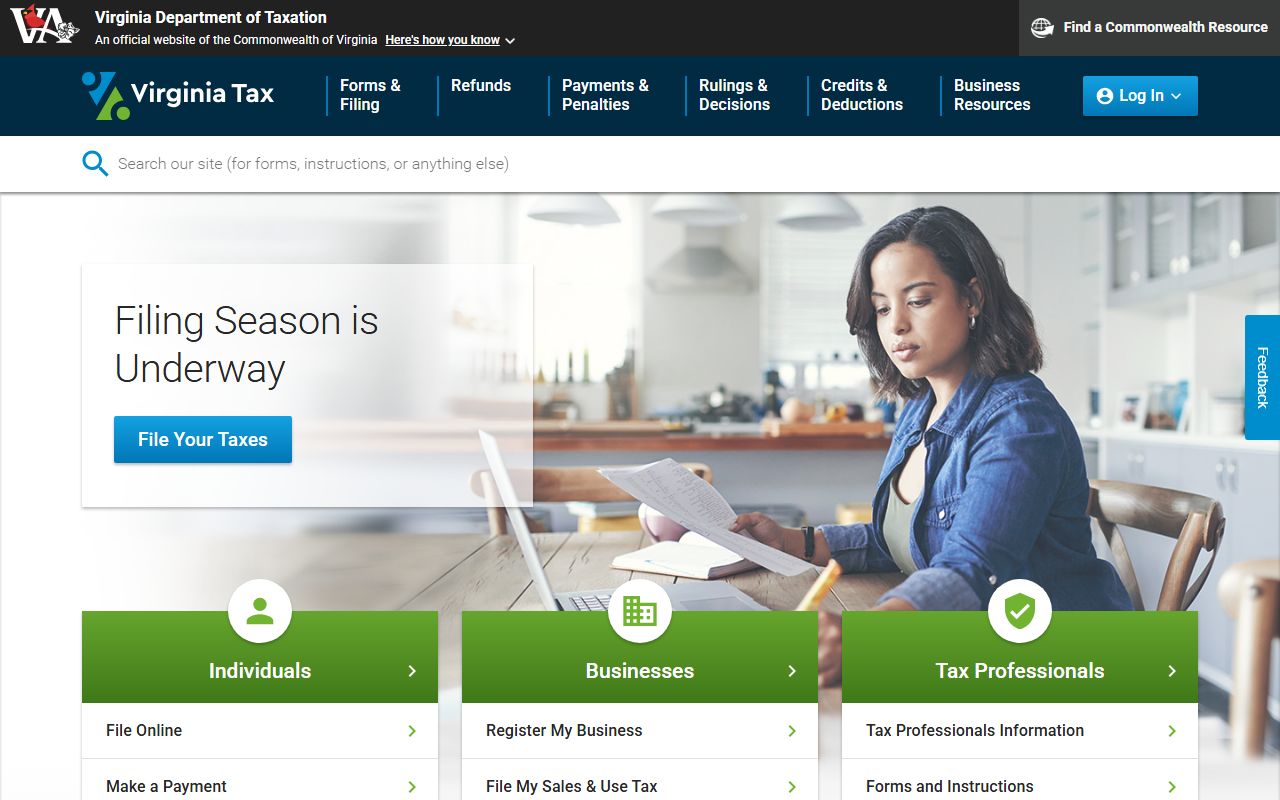
The Virginia Department of Taxation sets the statewide assessment standards that the Essex County Commissioner of the Revenue must apply to all real property in the county.
Tax Relief Programs
Essex County provides tax relief for elderly and disabled property owners under Virginia Code § 58.1-3210. To qualify, you must meet the county's age or disability criteria, own and occupy the property as your main home, and fall within the income and net worth limits set by the county. These limits can be changed from year to year, so contact the Commissioner of the Revenue in Tappahannock for the current thresholds before applying.
Disabled veterans with a total and permanent service-connected disability may qualify for a full exemption from real estate taxes on their primary residence under § 58.1-3219.5. Surviving spouses of veterans killed in action can also apply for this benefit. Applications are processed through the Commissioner's office and require certification from the U.S. Department of Veterans Affairs.
Essex County landowners who use their property for farming, timber production, or horticulture should ask the Commissioner whether they qualify for the land use taxation program. This program lets qualifying parcels be taxed at their use value rather than full market value, which can reduce tax bills significantly for rural landowners. The Commissioner's office can walk you through the eligibility rules and the deadlines for applying or renewing enrollment.
The Virginia Department of Housing and Community Development at dhcd.virginia.gov manages state-level programs that may provide additional financial assistance for qualifying Essex County homeowners beyond what the county offers locally.

DHCD resources can complement Essex County's local tax relief options for homeowners who meet state program eligibility requirements.
Land Books and Records Access
Under Virginia Code § 58.1-3301, the Essex County Commissioner of the Revenue must maintain a land book listing every taxable parcel in the county, the owner of record, the assessed value, and the taxes owed. This land book is a public record available for inspection at the Commissioner's office in Tappahannock. Older land books may be held at the courthouse or at the Library of Virginia in Richmond, where historical Virginia land records are preserved.
Land books are a practical tool for title examiners, attorneys, and researchers who need to verify tax payment history or trace property ownership. They show who owned each parcel and what taxes were assessed in each year, which is particularly useful when evaluating properties that have changed hands multiple times or had tax delinquencies in the past. In Essex County, where waterfront and river-access properties may carry significant value, confirming that taxes have been paid on time is an important part of any due diligence review.
Assessment records in Essex County are open for public inspection under § 58.1-3331. You do not need to own property in the county or provide a reason for your request. Staff at the Commissioner's office will help you find the records you need, and copies are available for a standard per-page fee. For bulk data or records in a specific format, submit a FOIA request to the county administrator.
The Circuit Court Clerk's office in Tappahannock holds deed records indexed by grantor and grantee name, along with plats and other land documents. Combining the Clerk's deed records with the Commissioner's assessment data gives you the most complete picture of any parcel: the legal ownership chain, the description of the land, and the tax history over time. Both offices are in Tappahannock, and the Essex County website at essexva.us has contact information for each.
Cities in Essex County
Essex County does not contain any independent cities. Tappahannock, the county seat, is a town under Virginia law rather than an independent city and is part of Essex County for all tax purposes.
Nearby Counties
Essex County is located in eastern Virginia along the Rappahannock River and borders several counties in the Northern Neck and Middle Peninsula regions.