
Montgomery County Property Tax Records Search
Montgomery County property tax records are maintained by the Commissioner of the Revenue and the Treasurer, both based in Christiansburg in Southwest Virginia. These records cover all taxable real estate in the county, and you can access assessment values, ownership details, and tax payment status through county offices or online tools the county provides. Each parcel record shows the owner name, parcel identification number, assessed land and improvement values, and a full history of tax payments. Property owners, buyers, and title researchers can search Montgomery County property tax records in person at the Commissioner's office or through the county's online portal, with no requirement to state a reason for the request.
Montgomery County Overview
Commissioner of the Revenue
The Montgomery County Commissioner of the Revenue is responsible for assessing all real estate and personal property in the county. Under Virginia Code Title 58.1, Chapter 32, every parcel in Montgomery County must be assessed at 100% of fair market value. The county's property base includes residential neighborhoods in Blacksburg and Christiansburg, rural mountain land in the surrounding Blue Ridge foothills, and commercial and institutional property connected to Virginia Tech and other employers in the area.
Assessment records kept by the Commissioner include the owner of record, parcel identification number, legal description, land value, improvement value, and the full history of assessed values for each parcel. When a deed is recorded with the Circuit Court clerk after a sale, the Commissioner's office reviews and updates the assessment files. If a recent purchase isn't reflected in the current records, contact the office with a copy of the recorded deed and ask for a status update.
The Commissioner's office is in Christiansburg at the county courthouse. Hours are generally Monday through Friday during regular business hours. Call before you go, particularly around election seasons, since commissioners in Virginia are elected officials and staff workloads can shift at certain times of year. Staff can explain how any property in the county was assessed and what sales data or appraisal methods were used.
Under Virginia Code § 58.1-3330, the county must send notice to property owners when assessed values change beyond a set threshold. If you get that notice and want to understand what changed, the Commissioner's office is the right first call.
Virginia's statewide property tax information is at tax.virginia.gov. That site covers how local commissioners operate under state law and what records they are required to keep.
Montgomery County Treasurer
The Montgomery County Treasurer collects real estate and personal property taxes based on values certified by the Commissioner of the Revenue. The Treasurer also manages delinquent tax accounts and can tell you whether a given parcel's taxes are current or past due.
Montgomery County sends tax bills twice a year. The due dates are set by the county and can vary slightly year to year. Check the county's website or call the Treasurer to confirm the current schedule. Taxes that go unpaid become a lien on the property, and that lien must be cleared before the property can be sold with a clean title. If you're buying or selling real estate in Montgomery County, the settlement process will include a check with the Treasurer to confirm no outstanding tax balances remain.
The Treasurer's office can provide receipts for past payments and verify current tax status. If you believe the amount billed is wrong, the correction process starts with the Commissioner of the Revenue. The Treasurer cannot change a bill amount without an assessment correction authorized by the Commissioner. So if the value seems off, start there.
Montgomery County, as a larger and more active county in the New River Valley, is likely to offer several payment methods including in-person payments in Christiansburg, mailed checks, and online payment options through the county's website at montva.com. Check for any convenience fees that apply to card or electronic payments before submitting.
How to Search Montgomery County Property Tax Records
The Montgomery County official website at montva.com is the best starting point for a property tax record search. Montgomery County may offer an online property search portal through the Commissioner of the Revenue or through a third-party assessment software provider. If an online tool is active, you can search by owner name, parcel number, or street address to find current assessment data, property characteristics, and recent sales information.
Under Virginia Code § 58.1-3331, assessment records are public records open to inspection by anyone. You don't need to own property in Montgomery County or explain your reason for looking. Visit the Commissioner's office in Christiansburg during business hours and ask for records on any parcel. Staff can pull the records at the counter, and copies are available for a small per-page fee.
Virginia's Freedom of Information Act gives you additional rights to request records in specific formats or in bulk. FOIA requests should go to the Montgomery County administrator's office. Responses are typically due within five business days, though the county can take additional time for large or complicated requests. For routine lookups of one or two parcels, calling or visiting in person is usually faster.
The Montgomery County Circuit Court clerk's office in Christiansburg holds deed and land records. Deed records show ownership history and legal property descriptions; tax records show assessed values and payment status. Using both together gives the most complete view of any parcel. The clerk is also reachable through the main county website.
Assessment Process
All real property in Virginia must be assessed at 100% of fair market value under Title 58.1, Chapter 32. Montgomery County applies this standard across a diverse land base. Properties range from densely developed residential and commercial parcels near Blacksburg and Virginia Tech to rural mountain tracts in the higher elevations of the county. Each type requires its own valuation approach under the mass appraisal model the Commissioner uses.
Each parcel's appraisal record includes lot size, building square footage, year built, construction type, and data on improvements. Under § 58.1-3332, you have the right to inspect your own appraisal card. This document shows the specific data used to set your assessed value. If the card has errors, such as wrong square footage, an improvement that was removed, or incorrect construction type, fixing those errors can result in a lower or corrected assessment.
If you and the Commissioner's office can't agree on a value, the next step is an appeal to the Board of Equalization. Under § 58.1-3378, Montgomery County must maintain a Board of Equalization that hears property value disputes. The board is independent of the Commissioner. It reviews the evidence from both sides and can reduce, confirm, or increase the assessed value. Hearing procedures follow § 58.1-3379.
Virginia's Department of Taxation at tax.virginia.gov sets and monitors assessment standards across all Virginia counties. Their resources explain mass appraisal methods and what rights property owners have during the process.
The screenshot below shows the Virginia Department of Taxation website, which sets the statewide assessment standards that Montgomery County must follow.
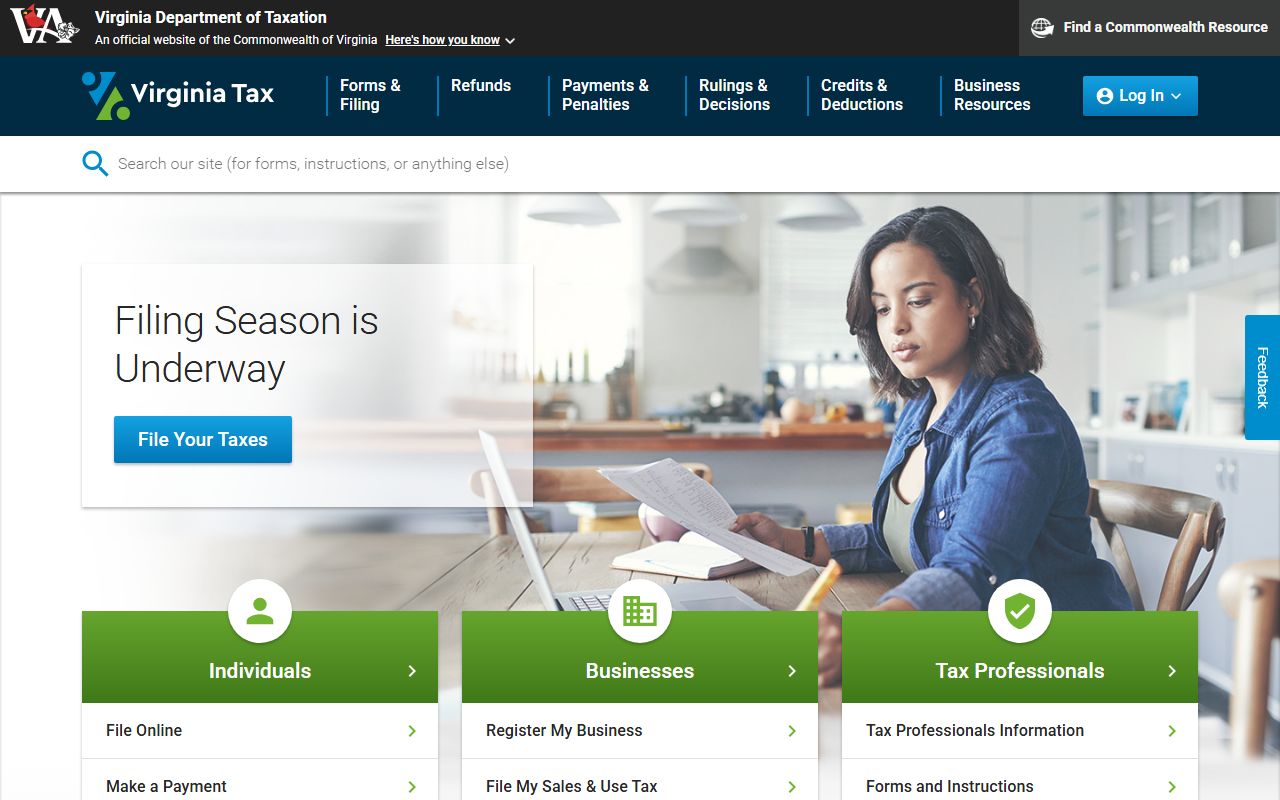
The Department of Taxation monitors assessment practices statewide, including in Montgomery County's active real estate market.
Tax Relief Programs
Montgomery County provides real estate tax relief for elderly and disabled property owners under Virginia Code Title 58.1, Chapter 32. Applicants must meet age or disability requirements, own and occupy the home as their primary residence, and fall within income and net worth limits set by the county. These limits can change from year to year, so check with the Commissioner of the Revenue for current figures before applying.
Veterans with a total and permanent service-connected disability may qualify for a full exemption from real estate taxes on their primary residence. Surviving spouses of veterans who died in the line of duty are also eligible under Virginia law. The Commissioner's office manages applications. You'll need a disability certification from the U.S. Department of Veterans Affairs to complete the process.
The Virginia Department of Housing and Community Development at dhcd.virginia.gov runs statewide housing programs that can work alongside local tax relief in Montgomery County. If county programs don't fully address your situation, checking DHCD's offerings is a reasonable next step.
The image below shows the Virginia DHCD website, which coordinates housing assistance and tax relief resources that may be available to Montgomery County residents.

DHCD programs can supplement the local tax relief options available to eligible Montgomery County homeowners.
Land Books and Records Access
Under Virginia Code § 58.1-3301, the Commissioner of the Revenue must maintain a land book listing each parcel, its owner, the assessed value, and the taxes charged. These books are public records. Anyone can inspect them at the Commissioner's office in Christiansburg during business hours. No reason or special authorization is needed.
Land books are a useful tool for researchers, attorneys, and buyers who want to trace property ownership or confirm assessment figures at a specific point in time. Older Montgomery County land books may be held at the courthouse or archived at the Library of Virginia in Richmond, which preserves historical records from across the state.
Under § 58.1-3331, assessment records are open to public inspection without the need to show cause or interest. Walk in, ask for the records you need, and staff will assist. Copies are generally available for a small per-page fee. You don't need a lawyer to access these records, and you don't need to own property in the county.
The Montgomery County Circuit Court clerk's office in Christiansburg holds deeds and plats that complement assessment data. Combining deed records with tax assessment information gives you a full picture of any parcel, including ownership history, legal descriptions, and current tax obligations. The clerk's office is accessible through the main county site at montva.com.
Cities in Montgomery County
Radford is an independent city adjacent to Montgomery County that has its own property tax records page. The Town of Blacksburg and the Town of Christiansburg are incorporated towns within the county, but they are not independent cities under Virginia law.
Nearby Counties
Montgomery County is in Southwest Virginia's New River Valley region. Its neighboring counties are listed below. Note that Roanoke and Salem are nearby independent cities but are not counties in this directory.