
Louisa County Property Tax Records Search
Louisa County property tax records are kept by the Commissioner of the Revenue and the Treasurer, both based in the town of Louisa in central Virginia. These offices maintain assessment data, owner information, and payment histories for all taxable real estate in the county, and records are open for public inspection under Virginia law. Each parcel file includes the owner name, parcel identification number, assessed land and improvement values, and tax payment history. Property owners, buyers, and title researchers can search Louisa County property tax records in person at the Commissioner's office or through any online portal the county provides, at no cost and with no requirement to show cause.
Louisa County Overview
Commissioner of the Revenue
The Louisa County Commissioner of the Revenue is the primary office for real estate assessment records in the county. This office assesses all real property at fair market value, as required under Virginia Code § 58.1-3200. The Commissioner also handles personal property assessments, maintains parcel records, and administers tax relief programs for residents who qualify.
Real estate records held by this office include the owner of record, parcel identification number, legal description, land and improvement values, and the history of assessed values. When a property sells or ownership changes, the deed recorded at the Circuit Court clerk's office prompts an update to the Commissioner's assessment files. If you've recently bought land or a home in Louisa County, expect a few weeks before the ownership update shows in county records.
Louisa County sits in a part of central Virginia that has seen growth pressure from the Richmond and Charlottesville metro areas. That means land values can shift, particularly along major corridors or near Lake Anna, which draws recreational and residential development. The Commissioner's office tracks these market trends when setting assessed values each reassessment cycle.
Under § 58.1-3330, the county must notify property owners when assessments change beyond a set threshold. If you get that notice, the Commissioner's office in Louisa is the right first call. Staff can explain how the new value was set and what your options are.
Virginia's Department of Taxation at tax.virginia.gov provides statewide guidance on how local commissioners must operate. Reviewing that guidance can help you understand the process before contacting the county office.
Louisa County Treasurer
The Louisa County Treasurer collects real estate taxes and personal property taxes based on assessments provided by the Commissioner of the Revenue. The Treasurer's office also handles delinquent tax collections and processes payments made by mail, in person, or online where available.
Tax bills in Louisa County are typically issued twice a year. The Treasurer's records show whether taxes on any parcel are current, delinquent, or under collection action. If you're buying property in Louisa County, a title search will include a Treasurer check to confirm there are no outstanding balances. Unpaid real estate taxes are a lien on the property and must be cleared before a clean title can transfer to a new owner.
The Treasurer's office can provide payment receipts and confirm the current tax status of any parcel in the county. Questions about the bill amount itself should go to the Commissioner's office first, since the Treasurer can only adjust bills when the Commissioner authorizes a correction to the underlying assessment. The county's main website at louisacounty.gov has contact information for both offices.
How to Search Louisa County Property Tax Records
To search Louisa County property tax records, start with the county's website at louisacounty.gov. The site lists contact information for both the Commissioner of the Revenue and the Treasurer. Look for any links to an online property search portal, which the county may provide through a third-party assessment software vendor.
Under Virginia Code § 58.1-3331, assessment records are open for public inspection. You don't need a reason or a legal interest in a property to view its records. Anyone can walk into the Commissioner's office in Louisa and ask to see data on any parcel in the county. Staff can pull up records at the counter, and copies are usually available for a small per-page fee.
If you need records in bulk or in a specific format, Virginia's Freedom of Information Act lets you submit a written request to the county administrator's office. Responses are generally due within five business days, though the county may ask for more time when requests are large or complex. FOIA is a good route if you need data on multiple parcels or want records in a spreadsheet or database format.
The Louisa County Circuit Court clerk's office holds deeds, plats, and other land records that complement tax data. Parcel identification numbers, legal descriptions, and deed history can all be found there. Cross-referencing the clerk's records with Commissioner data gives a complete picture of any property in the county.
Assessment Process
Under Virginia Code § 58.1-3200, all real property in Virginia must be assessed at 100% of fair market value. Louisa County follows this standard. The Commissioner's office uses mass appraisal methods to value the county's mix of agricultural land, rural residential properties, lakefront lots near Lake Anna, and commercial parcels along key corridors. Each property type requires its own valuation approach.
Appraisal files include lot size, building square footage, year built, construction type, number of rooms, and improvements like garages, outbuildings, or major renovations. Under § 58.1-3332, property owners have the right to inspect their own appraisal card to see exactly what data was used. If the card has errors, getting them fixed may result in a corrected assessment.
When a property owner can't resolve a dispute with the Commissioner's office, the next step is filing an appeal with the Board of Equalization. Under § 58.1-3378, each county must have a Board of Equalization to hear these appeals. The board is independent from the Commissioner and can order a value reduced, increased, or kept as is. Procedures are set out in § 58.1-3379.
The following screenshot shows the Virginia Department of Taxation website, which provides statewide guidance on property tax assessment standards in Virginia.
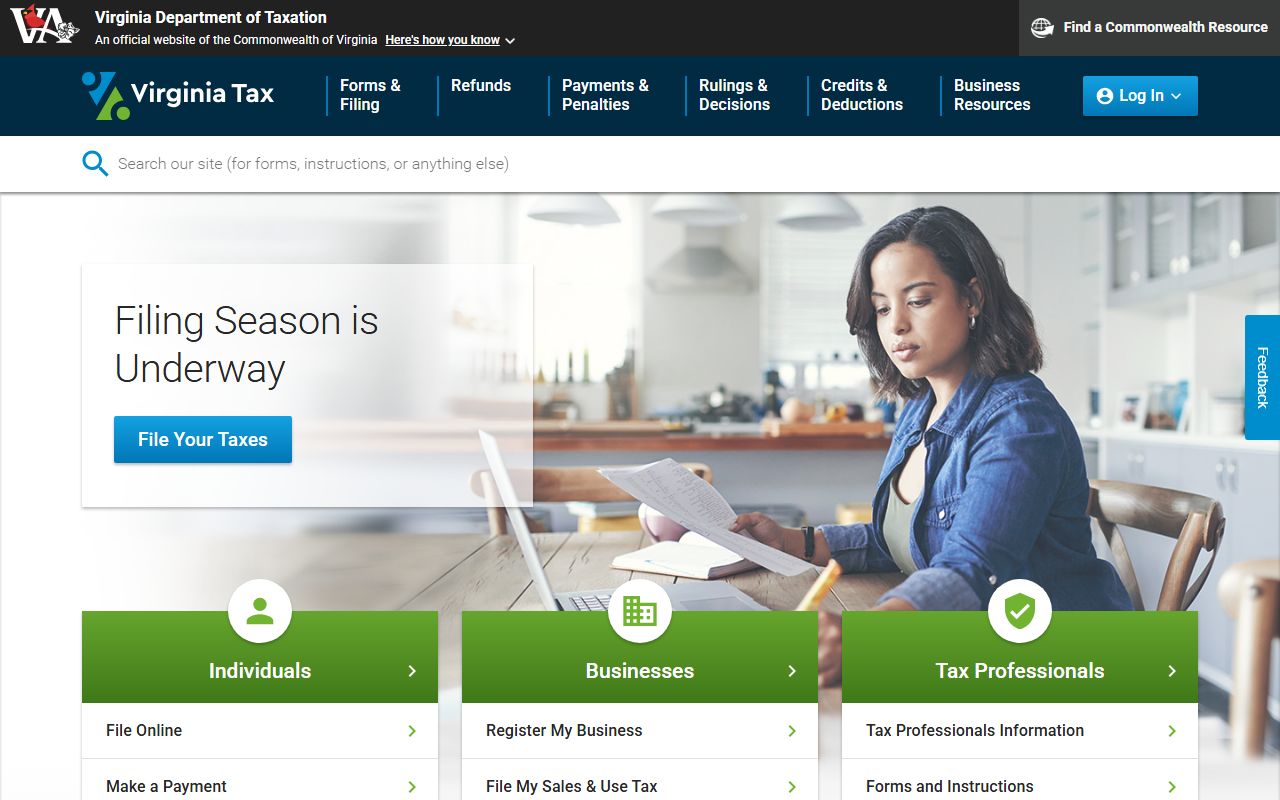
The Virginia Department of Taxation sets uniform standards that all local commissioners must follow when assessing real property across the state.
Tax Relief Programs
Louisa County offers tax relief for qualifying elderly and disabled property owners under Virginia Code § 58.1-3210. Applicants must meet age or disability criteria, own and occupy the property as their primary residence, and fall within income and net worth limits the county sets. Those limits can shift from year to year, so check with the Commissioner of the Revenue for the most current figures.
Disabled veterans and surviving spouses of veterans killed in action may qualify for a full real estate tax exemption under § 58.1-3219.5. This applies to the primary residence and requires a certification of total and permanent service-connected disability from the U.S. Department of Veterans Affairs. The Commissioner's office processes these applications and can tell you what documents you'll need.
If you're struggling with property tax bills in Louisa County, call the Treasurer's office early. In some cases, payment plan arrangements can be worked out before a bill becomes seriously delinquent. Acting before the due date is always better than waiting until after.
The image below shows the Virginia Department of Housing and Community Development website, which coordinates housing assistance and certain tax relief resources for Virginia residents.

DHCD programs can supplement local relief options for Louisa County property owners who meet eligibility requirements.
Land Books and Records Access
Under Virginia Code § 58.1-3301, every county commissioner must maintain a land book listing each parcel, its owner, the assessed value, and the tax owed. These land books are public records. Anyone can inspect them at the Commissioner's office in Louisa during business hours.
Land books for Louisa County are useful for tracing property ownership and values at a given point in time. Researchers, title examiners, and property owners use them to confirm assessment history, check tax obligations, and understand how a property's value has changed over multiple reassessment cycles. Older land books may be at the county courthouse or at the Library of Virginia in Richmond.
Assessment records under § 58.1-3331 are open without the need to justify your interest. You can ask to see records for any parcel in the county, not just ones you own. Copies cost a small per-page fee, and staff can help you find what you need. This open-access standard applies across all Virginia counties under state law.
The Louisa County Circuit Court clerk's office holds deeds, plats, and other recorded land documents that round out the picture. Deed records paired with assessment data show ownership history, legal descriptions, and transfer prices over time. The clerk's office is in Louisa and can be reached through the county's main site at louisacounty.gov.
Cities in Louisa County
Louisa County does not contain any independent cities. The county seat is the Town of Louisa, which is a town rather than an independent city under Virginia law.
Nearby Counties
Louisa County borders six other Virginia counties in the central region of the state.