
Search Albemarle County Property Tax Records
Albemarle County property tax records are managed by the county's Real Estate Assessment Division and Treasurer's Office, both accessible through the county's website at albemarle.org. The county conducts annual reassessments and offers online tools for searching parcel data, viewing assessment history, and paying taxes. These records cover all taxable real property in Albemarle County, including residential, commercial, agricultural, and forested parcels surrounding the independent city of Charlottesville. Each record shows the owner name, parcel ID, land value, improvement value, and current assessment. Virginia law requires all Albemarle County property tax records to be open for public inspection, so anyone can search them without needing to state a reason.
Albemarle County Overview
Real Estate Assessment Division
Albemarle County's Real Estate Assessment Division conducts annual assessments of all real property in the county. Virginia law under § 58.1-3200 requires that all real estate be assessed at 100% of fair market value. The division uses a computerized mass appraisal system that analyzes recent sales data, property characteristics, and market trends to set equitable values across the county's diverse mix of properties.
Assessment records maintained by this division are detailed and include land value, improvement value, total assessed value, property characteristics such as square footage and year built, and the sales history of the parcel. The division also tracks changes to parcels such as subdivisions, lot consolidations, and new construction. When a building permit is issued in the county, the assessment office updates its records to reflect new improvements once construction is complete.
Annual reassessment means that property values in Albemarle County are reviewed every year, which is more frequent than many Virginia counties. This keeps assessed values closer to actual market conditions. Under § 58.1-3330, the county must notify property owners when their assessed value changes, so you will receive a notice in the mail if your assessment goes up or down from one year to the next.
If you believe your assessment is too high or contains errors in the property data, the first step is to contact the Real Estate Assessment Division directly at albemarle.org. Staff can review the property characteristics on file and explain how your value was determined. Many assessment disputes are resolved at this level without the need for a formal appeal.
Albemarle County Treasurer
The Albemarle County Treasurer collects real estate and personal property taxes based on assessments set by the county's assessment division. The Treasurer's office processes payments in person, by mail, and online. Payment due dates are set by the county, and late payments are subject to interest and penalties under state law.
Tax records held by the Treasurer's office show current tax status, payment history, and any delinquent amounts for each parcel. If you're doing a title search before buying property in Albemarle County, confirming that no back taxes are owed is a key step. Delinquent taxes are a lien on the property and can follow it through a sale if not addressed. The Treasurer can confirm current tax status for any parcel.
Online tax payment is available through the county's website. You can also view your current tax bill and payment history online if you have account information. The Treasurer's office works closely with the assessment division so that changes to assessed values are quickly reflected in tax bills.
How to Search Albemarle County Property Records
Albemarle County provides several online tools for searching property tax records. The county's online property search lets you look up parcels by owner name, address, or parcel ID number. Results show the current assessed value, property characteristics, and tax information. This is the fastest way to get basic assessment data without visiting an office.
The county also maintains a GIS parcel data portal that integrates property boundaries with assessment information. This tool is useful for viewing parcels on a map, checking adjacent lots, and understanding how a property relates to its surroundings. GIS data can be downloaded in various formats for use in mapping software.
Under Virginia Code § 58.1-3331, all assessment records are open for public inspection. If you need information that isn't available through the online portals, you can visit the county offices in person or submit a written request. Staff at the assessment division can pull up appraisal cards and other detailed records.
The screenshot below shows the Virginia Code's public inspection requirement, which ensures that Albemarle County property tax records remain accessible to anyone who wants to view them.
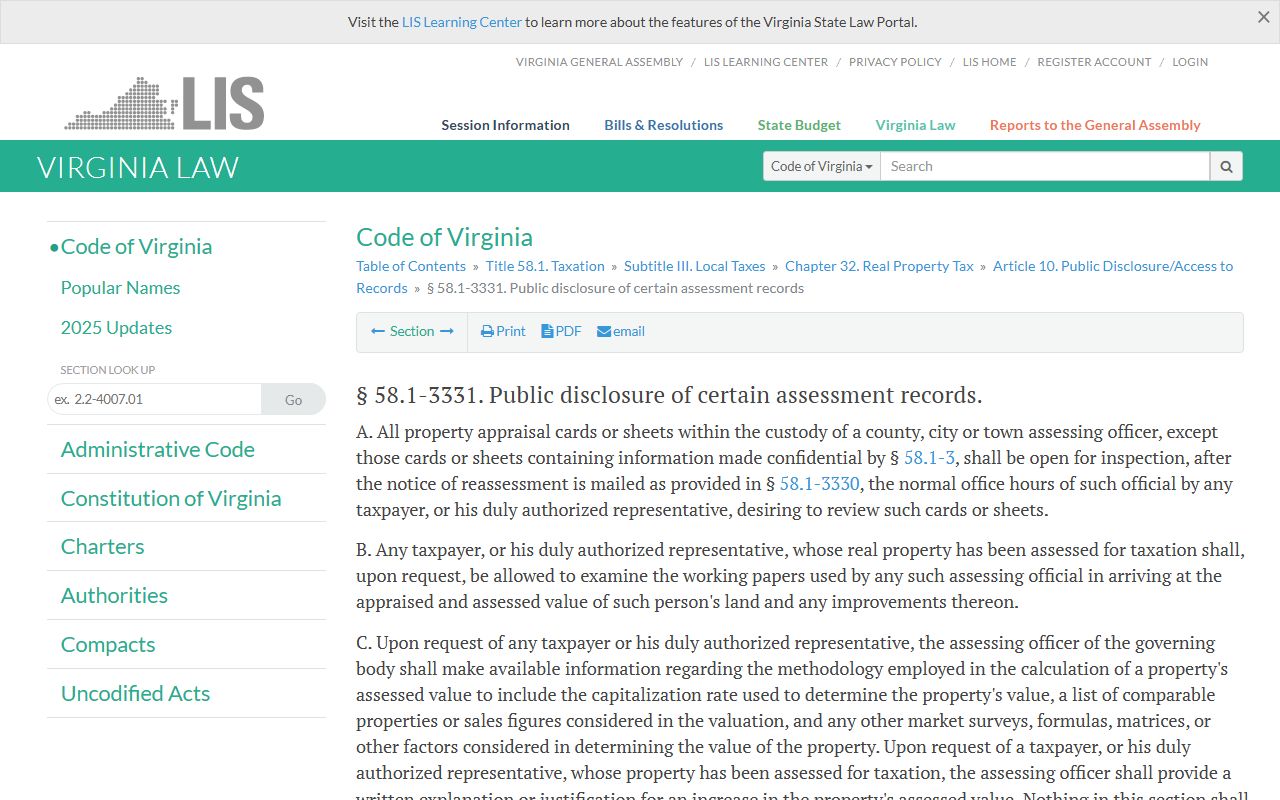
Virginia law guarantees public access to assessment records, making it straightforward to look up property data in Albemarle County without needing to explain your reasons.
Assessment Process and Appeals
Albemarle County's mass appraisal process uses recent comparable sales as the primary basis for setting assessed values. The assessment division groups similar properties together and applies valuation models based on what buyers have paid for comparable parcels in recent months. This method produces consistent results across a large number of properties but may not always capture unique features that make an individual property more or less valuable than the model suggests.
Property owners who want to understand how their value was set can request to view their appraisal card under § 58.1-3332. The card lists all the characteristics the assessor recorded for the property, including lot size, building dimensions, condition ratings, and any special features. Reviewing this card is an important first step because errors in the data can lead to incorrect assessments. If the card shows the wrong square footage, wrong number of bathrooms, or an improvement that doesn't exist, the assessor can correct the record and recalculate the value.
If a correction to property data doesn't resolve the dispute, property owners can file a formal appeal with the Board of Equalization. Under § 58.1-3378, Albemarle County's Board of Equalization is an independent body appointed by the Circuit Court. The board can lower, raise, or leave unchanged an assessment based on the evidence presented at a hearing. Hearing procedures are governed by § 58.1-3379, which sets out how appeals must be filed and how hearings are conducted.
Beyond the Board of Equalization, property owners in Albemarle County have the option to appeal further to the Circuit Court if they remain unsatisfied. This process is more formal and typically involves filing a written petition within a set time frame after the board issues its decision. Most owners resolve their concerns at the administrative level, but the court option provides an additional check on the assessment system.
Additional information on the appeals process at the state level is available through Albemarle County's assessment appeals page and the Virginia Department of Taxation.
Tax Relief Programs
Albemarle County participates in the state-authorized tax relief program for elderly and disabled property owners under Virginia Code § 58.1-3210. Qualifying residents who own and occupy their home as a primary residence may receive a reduction or exemption from real estate taxes. The program has income and net worth limits, and applicants must meet age or disability criteria set by the county. Limits and benefit amounts can change from year to year, so confirm current figures with the county's assessment division.
Disabled veterans who have a total and permanent service-connected disability may qualify for a full exemption from real estate taxes on their primary residence under § 58.1-3219.5. Surviving spouses of veterans killed in action are also eligible. Certification from the U.S. Department of Veterans Affairs is required to apply. Contact the Commissioner of Revenue's office to begin the application process.
The Virginia Department of Housing and Community Development administers additional housing and financial assistance programs that may benefit Albemarle County residents facing difficulty paying property taxes. These state programs can work alongside local relief to reduce the burden for eligible households.
Land Books and Record Inspection
Virginia's land book system, governed by § 58.1-3301, requires each county to maintain an official list of all taxable real property, its owner, and its assessed value. Albemarle County's land book is kept by the Commissioner of the Revenue and is open for public inspection. The land book provides a reliable record of property ownership and values at a specific point in time, making it useful for title research and historical property tracking.
For Albemarle County, land records are also accessible through the county's GIS data portal and the Circuit Court clerk's office. The clerk holds deeds, plats, and other instruments recorded against properties in the county. Combining deed records with assessment data from the Commissioner's office gives you a complete picture of a property's history, legal description, and tax standing.
The image below shows the Virginia land book statute, which sets out the requirements for maintaining and accessing public property records in counties across the state.
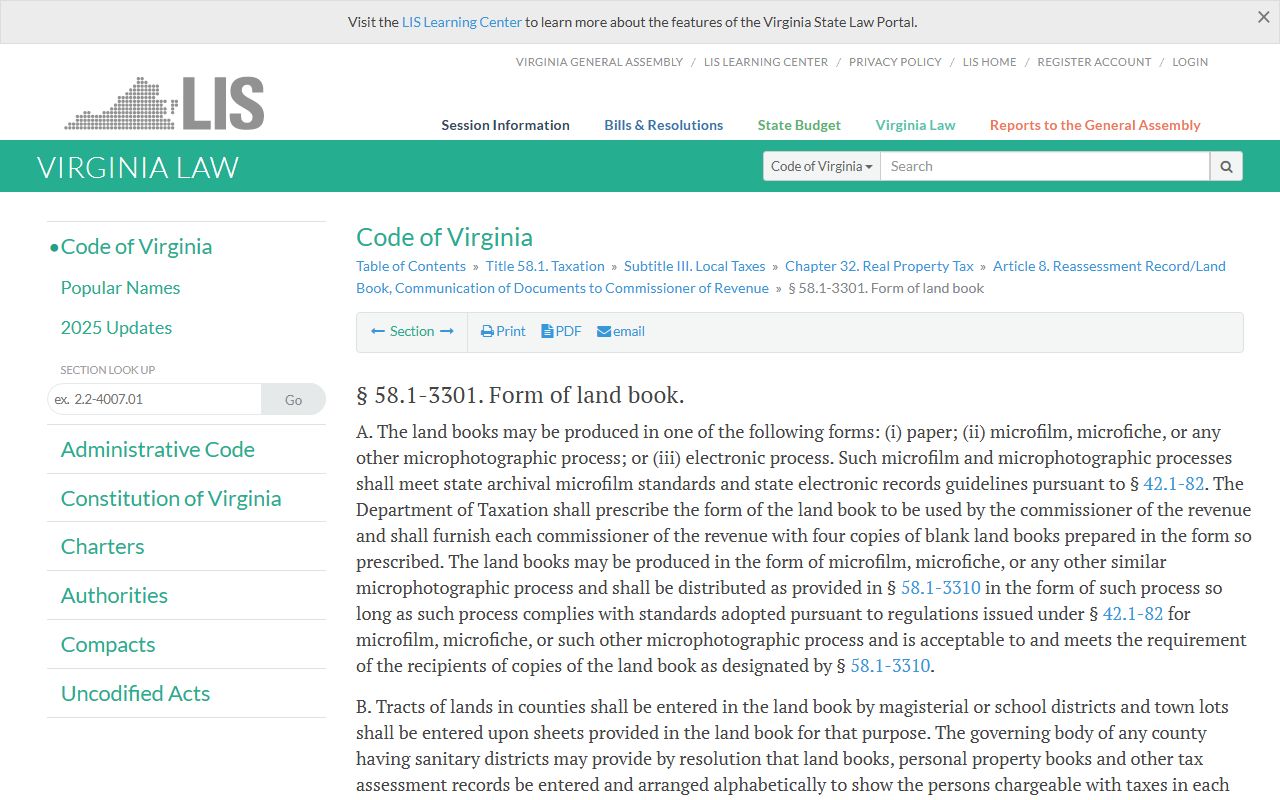
Land books in Albemarle County are part of a statewide system that makes property tax records a matter of public record, accessible to owners, researchers, and the general public alike.
Cities in Albemarle County
Albemarle County surrounds but does not include Charlottesville, which is an independent city with its own separate property tax system.
Nearby Counties
Albemarle County borders several counties in central Virginia. Select a neighboring county below to find property tax records for that area.