
Halifax County Property Tax Records Search
Halifax County property tax records are managed by the Commissioner of the Revenue and the Treasurer, with both offices located in Halifax, the county seat in Southside Virginia. These offices handle all aspects of real estate assessment and tax collection for property in the county. You can access records in person at the courthouse complex or check the county's official website at halifaxcounty.gov for online resources and contact information. Records include owner names, parcel identification numbers, assessed values for land and improvements, and tax payment history. Virginia law requires assessment data to be open for public inspection, so buyers, owners, and researchers can look up any parcel in Halifax County.
Halifax County Overview
Commissioner of the Revenue
The Halifax County Commissioner of the Revenue assesses all real estate in the county at fair market value, as required by Virginia Code § 58.1-3200. Halifax County is a large Southside county with a diverse mix of farmland, timberland, residential neighborhoods, and lakefront property along Kerr Reservoir and Leesville Lake. Each property type requires a distinct valuation approach within the state's 100% fair market value standard.
The Commissioner's files for each parcel hold the owner of record, the parcel identification number, a legal description, land value, building or improvement value, and a history of assessed values over time. When property changes hands, the deed recorded at the Circuit Court clerk's office prompts an update to the Commissioner's ownership records. New construction and permitted improvements also trigger revisions to the appraisal data.
The Commissioner's office is in Halifax and is open Monday through Friday during regular business hours. Staff can pull records at the counter, explain valuation methodology, and tell you what steps to take if you believe your assessment is too high. Calling ahead to confirm hours before you make the drive from outlying parts of the county is a good idea.
Under § 58.1-3330, property owners must receive notice when their assessed value changes beyond a set threshold. If that notice arrives and you have questions, the Commissioner's office is where to start. They can review the data behind the change and discuss your options.
The Virginia Department of Taxation at tax.virginia.gov provides statewide guidance on assessment standards and how local offices operate throughout Virginia.
Halifax County Treasurer
The Halifax County Treasurer collects property taxes based on assessments the Commissioner of the Revenue sets each year. The Treasurer's office sends out bills, accepts payments, and handles delinquent accounts for real estate and personal property in the county. Payment options may include in-person, mail, and online, depending on what the county has set up. Visit halifaxcounty.gov for current payment instructions.
Real estate taxes in Halifax County are typically billed in two installments during the year. The Treasurer keeps a payment status record for every parcel. Buyers and their settlement attorneys check those records before closing to make sure no taxes are unpaid. Delinquent real estate taxes are a lien on the property in Virginia, which means they must be paid before a clean title can change hands. The Treasurer can provide written confirmation of current tax status for use in real estate transactions.
Questions about why a bill is a certain amount belong to the Commissioner's office. The Treasurer can only modify a bill when the Commissioner authorizes a correction to the underlying assessment. What the Treasurer handles is the payment side: confirming receipt, tracking payment history, and following up on past-due accounts. If taxes have gone unpaid for a long time, the county may pursue collection actions up to and including tax sale proceedings.
How to Search Halifax County Property Tax Records
Check the Halifax County website at halifaxcounty.gov first. Look under the Commissioner of the Revenue section for any links to online assessment search portals. Some Virginia counties use third-party assessment platforms that let you search by owner name, parcel number, or property address to view assessment details, sales history, and property characteristics.
Under Virginia Code § 58.1-3331, assessment records are public and open for inspection without any need to explain your purpose. You can walk in to the Commissioner's office and ask to see any parcel record. Staff will pull the file and let you review it. Copies are typically available for a small per-page fee. There is no requirement that you own property in the county or have any legal connection to the parcel you're asking about.
For large data sets or records in specific formats, a written FOIA request to the county administrator's office is the right route. Virginia's Freedom of Information Act requires the county to respond within five business days, though an extension can be requested for complex or voluminous requests. Naming the specific parcels or date ranges you need will help staff locate records faster.
The Halifax County Circuit Court clerk's office holds deeds, plats, and related land records in Halifax. Combining deed records with assessment data from the Commissioner gives you a complete picture of a property's ownership chain and value history. South Boston, the town within Halifax County, is a town rather than an independent city, so its property records are part of the county's system.
Assessment Process
Halifax County assesses all real property at 100% of fair market value under § 58.1-3200. The Commissioner uses mass appraisal methods to value thousands of parcels across a large county. Properties range from small residential lots in South Boston to large agricultural tracts, lakefront recreational land near the Kerr and Leesville reservoirs, and commercial properties along major corridors. Each category uses different valuation inputs.
Appraisal records for each parcel include the lot size, building size, year built, construction type, number of rooms, and noted improvements. Under § 58.1-3332, every property owner has the right to inspect their appraisal card. That card shows the data the Commissioner used to reach your assessed value. If the card contains errors, such as the wrong square footage or an improvement that no longer exists, correcting the data can lead to a revised assessment.
If you disagree with your value and can't work it out informally with the Commissioner, the next step is appealing to the Board of Equalization. Under § 58.1-3378, every Virginia county must appoint such a board, and it operates independently from the Commissioner. The board can reduce, increase, or maintain a value based on the evidence presented. Hearing procedures are governed by § 58.1-3379. Comparable sales data is usually the most persuasive evidence at a hearing.
The screenshot below shows the Virginia Department of Taxation website, which provides the uniform standards all Halifax County assessments must meet.
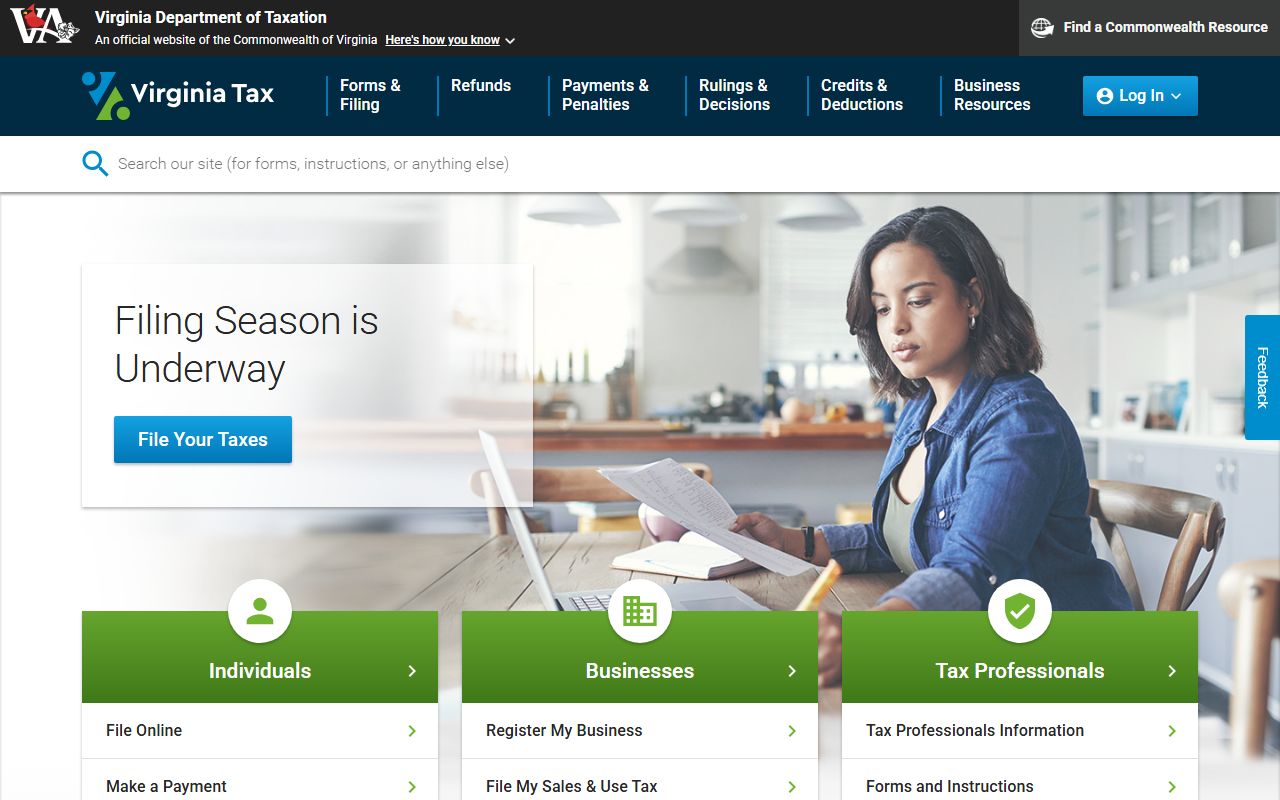
The Virginia Department of Taxation sets and enforces assessment standards that apply equally to Halifax County and all other Virginia localities.
Tax Relief Programs
Halifax County offers real estate tax relief for elderly and disabled homeowners under Virginia Code § 58.1-3210. Applicants must meet the county's age or disability criteria, own and live in the home as their primary residence, and fall within income and net worth limits set by the Board of Supervisors. Check with the Commissioner of the Revenue for the current year's limits, since the board can adjust them.
Totally and permanently disabled veterans and surviving spouses of service members killed in action may qualify for a full real estate tax exemption on their primary residence under § 58.1-3219.5. The U.S. Department of Veterans Affairs must certify the disability. Applications go through the Commissioner's office in Halifax.
The Virginia Department of Housing and Community Development at dhcd.virginia.gov offers some statewide programs that can work alongside local tax relief for Halifax County residents. If taxes are creating financial hardship, checking both local and state options is a good step.
The image below shows the DHCD website, where Virginia residents can find housing assistance and supplemental tax relief resources.
DHCD assistance programs can complement Halifax County's local relief offerings for eligible property owners.
Land Books and Records Access
Virginia's land book requirement under § 58.1-3301 means the Halifax County Commissioner must maintain an annual list of every taxable parcel, its owner, assessed value, and taxes due. This land book is a public document. Anyone can look at it at the Commissioner's office in Halifax during business hours. It serves as the official basis for tax bills and as a year-by-year record of property ownership and values throughout the county.
Title examiners, attorneys, researchers, and property buyers use land books to trace past ownership, verify assessed values, and check whether taxes were paid during a given period. Halifax County has a long history, and older land books from prior decades may be held at the county courthouse or archived at the Library of Virginia in Richmond, which maintains historical records from all Virginia counties.
Assessment records are open for public inspection under § 58.1-3331 without any requirement to explain your purpose or show a legal interest. Staff at the Commissioner's office can help you find specific records. Copies typically cost a small per-page fee. There is no restriction on who can make this kind of request.
The Halifax County Circuit Court clerk's office holds deeds, plats, and other land records that pair well with tax and assessment data. When you're tracing a property from one owner to the next over many years, using both deed records and land book entries together gives the most complete picture. The clerk's office is located in Halifax alongside the other county offices.
Cities in Halifax County
Halifax County does not contain any independent cities. South Boston is a town within the county rather than an independent city under Virginia law.
Nearby Counties
Halifax County borders several counties in Southside and Central Virginia.