
Access Charlotte County Assessment Records
Charlotte County property tax records are maintained by two elected offices, the Commissioner of the Revenue and the Treasurer, both headquartered in Charlotte Court House in south-central Virginia. These records are public under Virginia law, meaning anyone can access them to find assessment values, ownership details, and tax payment status for any parcel in the county without needing to state a reason or have a legal interest in the property. Records include owner names, parcel numbers, land values, improvement values, and tax payment history for all taxable real estate in Charlotte County. You can search them in person at the county offices or request specific records in writing.
Charlotte County Overview
Commissioner of the Revenue
The Charlotte County Commissioner of the Revenue assesses all real property in the county at fair market value as required by Virginia Code § 58.1-3200. The office maintains parcel-level records covering the owner's name, parcel identification number, legal description, land value, improvement value, and total assessed value. These files are the basis for the county's annual tax levy, and they are updated throughout the year as changes occur.
Charlotte County is a rural Southside Virginia county with a mix of residential, agricultural, and timberland parcels. The Commissioner uses appropriate valuation methods for each property type. Farm and forest land may qualify for use-value assessment under state programs, which can significantly reduce the tax burden compared to full fair market value. If you own agricultural land in Charlotte County, ask the Commissioner's office about use-value assessment eligibility and how to apply. The application process and deadlines are set by state and local rules.
When property sells in Charlotte County, the recorded deed at the Circuit Court clerk's office triggers an update in the Commissioner's assessment files. The Commissioner then reviews the parcel and may update the assessed value based on the sale price and comparable market data. Staff can explain how any specific parcel was assessed and what data informed the value. The office is in the courthouse complex in Charlotte Court House.
The following image is from the Charlotte County official government website, which links to the Commissioner and Treasurer's departments.
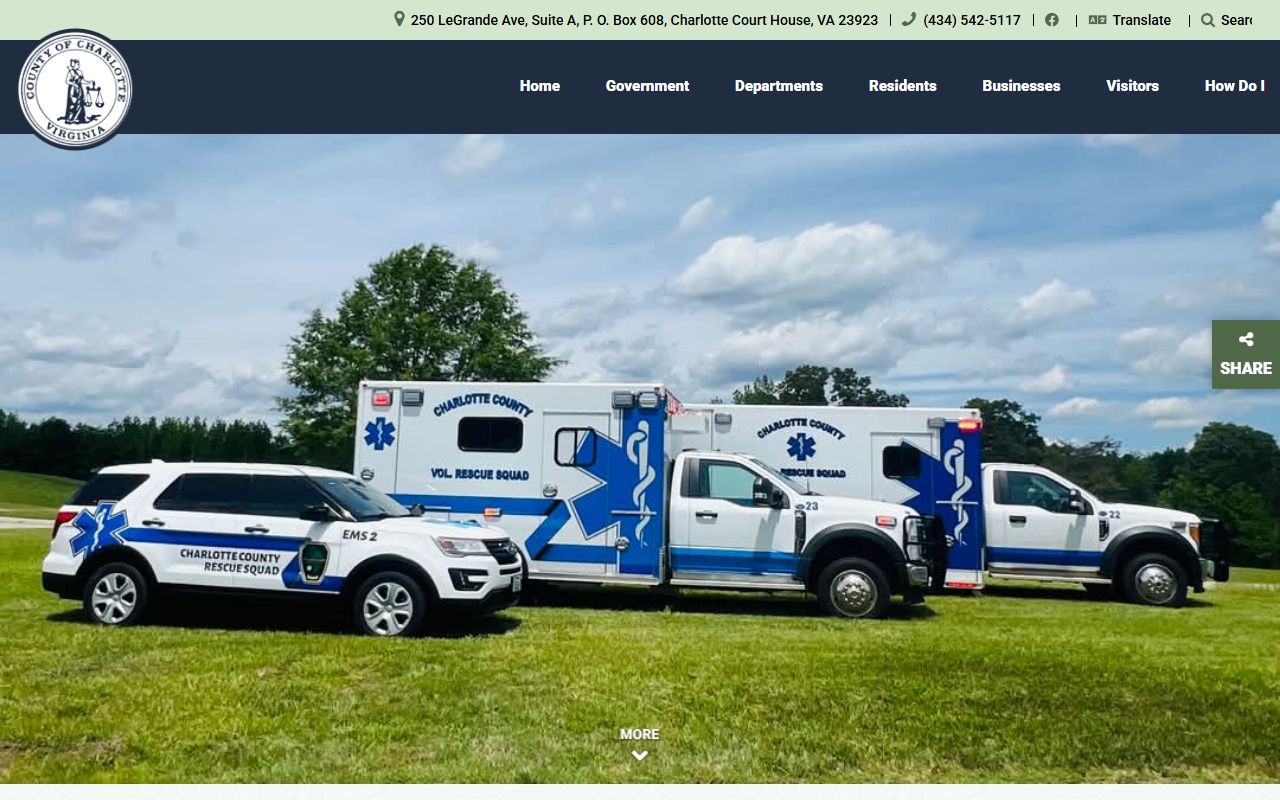
You can reach the Commissioner's office directly through the Charlotte County government website.
Charlotte County Treasurer
The Charlotte County Treasurer collects real estate and personal property taxes using values set by the Commissioner of the Revenue. The office generates tax bills and processes payments by mail, in person at the courthouse, and through any online options the county provides. Real estate taxes in Virginia counties are typically due in two installments per year. Confirm current due dates at the county's website at charlottecountyva.gov before the payment deadline approaches.
The Treasurer maintains records of all tax payments and delinquencies. These records are public. Unpaid real estate taxes become a lien on the property under Virginia law. A lien survives a property sale unless it is resolved, which is why any real estate closing in Charlotte County will include a tax status check with the Treasurer. The Treasurer can provide a written statement confirming whether taxes on a given parcel are current, delinquent, or subject to ongoing collection action.
For questions about the amount on your tax bill, the Commissioner's office is the right contact. The Treasurer processes collections but cannot authorize assessment changes. For payment receipts, balance inquiries, or delinquency questions, the Treasurer is the office to call.
The following image is from the Charlotte County Treasurer's department page.
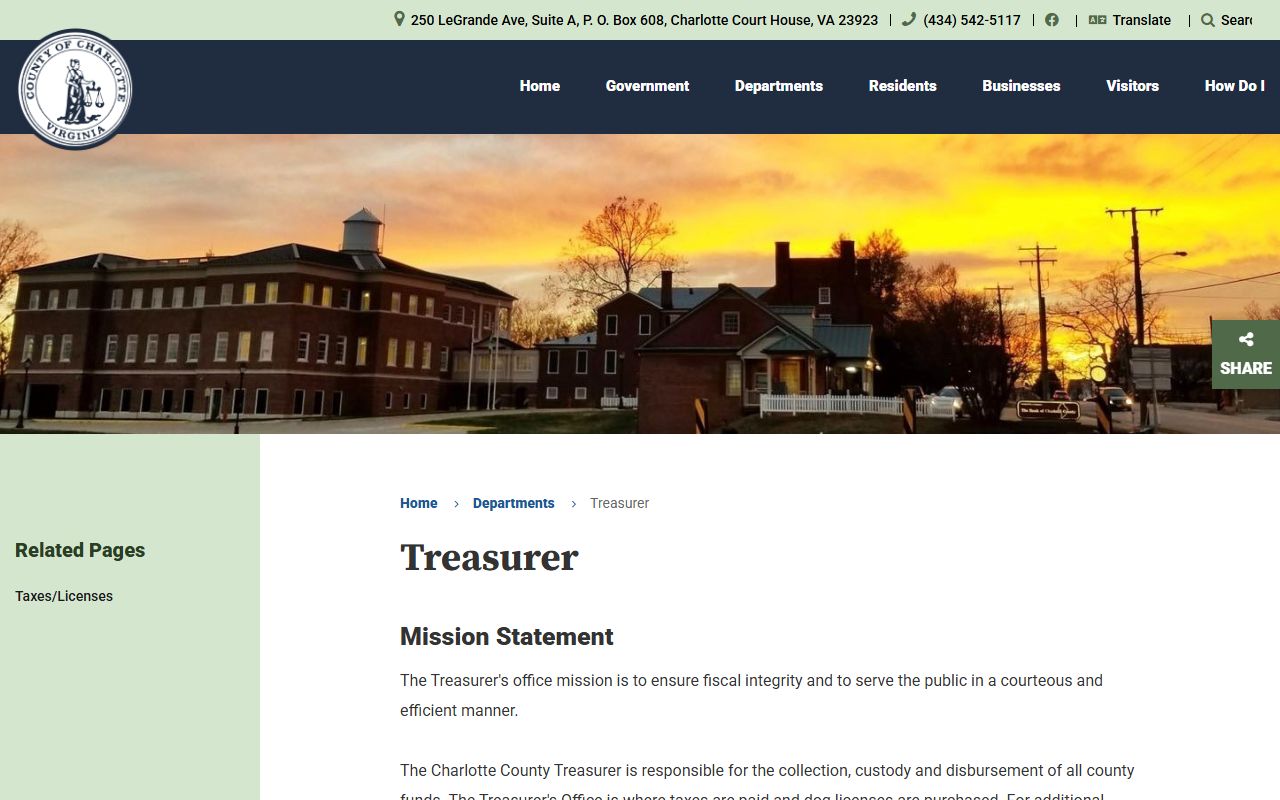
The Treasurer's office details are available on the Charlotte County website.
How to Search Property Records
Start by visiting the Charlotte County government website to see if an online property search portal is currently active. Some Virginia counties contract with assessment software vendors who provide public-facing search tools. If such a tool is available, you can search by owner name, parcel ID, or street address and view basic assessment data without visiting Charlotte Court House in person.
If no online portal is active, contact the Commissioner of the Revenue's office. Under Virginia Code § 58.1-3331, all assessment records are open for public inspection at the county's offices during regular business hours. No reason is required, and no special standing is needed to view records for any parcel. Staff can assist at the counter and provide copies for a small fee. Rural counties like Charlotte often have parcel records that are best accessed directly from the Commissioner's office.
The Circuit Court Clerk's office in Charlotte Court House holds deed records and plats that complement the Commissioner's assessment files. Using both sets of records together gives a more complete picture of any parcel's ownership and legal history. Both offices are in or near the courthouse complex.
Assessment Process
Charlotte County must assess all real property at 100 percent of fair market value as required by § 58.1-3200. The Commissioner of the Revenue uses comparable sales data, property inspections, and parcel characteristics to estimate what each property would sell for in an arm's-length market transaction. For residential properties this typically means comparing recent sales of similar homes. For agricultural land, the analysis looks at factors like soil type, tillable acres, and comparable farm sales.
General reassessments are required by state law on a defined schedule. Counties must reassess at least every six years. Between those cycles, the Commissioner's office updates parcels as changes occur, particularly when properties sell, when new buildings are completed, or when parcels are divided or combined. This ongoing maintenance keeps the tax roll accurate and avoids large assessment swings when a general reassessment eventually occurs.
If you disagree with your assessed value, you have the right to appeal. Start at the Commissioner's office and request a review. Ask what comparable sales were used and how the value was determined. If the informal review does not resolve the dispute, you can file with the Board of Equalization under § 58.1-3378. Under § 58.1-3379, the Board must hold a hearing and consider your evidence. A recent independent appraisal is often the most persuasive evidence you can bring to that hearing.
Tax Relief Programs
Charlotte County offers real estate tax relief to elderly and disabled homeowners who qualify under Virginia Code § 58.1-3210. Qualifying residents who own and occupy their home as a primary residence may receive a reduction or full exemption. The county sets its own income and age thresholds within state guidelines, so contact the Commissioner of the Revenue for current eligibility limits and the application form. Submitting your application before the county's annual deadline ensures the relief applies to that year's tax bill.
Virginia's veteran exemption under § 58.1-3219.5 grants a full exemption from real estate taxes to veterans who have a 100 percent total and permanent disability rating from the VA. Surviving spouses of qualifying veterans may also continue to receive the benefit. To apply, bring your VA disability documentation and proof of property ownership and primary residency to the Commissioner of the Revenue's office.
The Virginia Department of Housing and Community Development at dhcd.virginia.gov offers state-level housing assistance programs that may help lower-income homeowners manage property tax costs. Check the DHCD website for current program details and eligibility requirements, which can change from year to year.
The following image is from DHCD's website, which describes state housing and tax relief programs.

DHCD programs at dhcd.virginia.gov can supplement Charlotte County's local relief programs for qualifying homeowners.
Land Books and Public Access
The Commissioner of the Revenue maintains Charlotte County's land book as required by Virginia Code § 58.1-3301. This comprehensive record lists every parcel in the county, the owner's name, and the assessed value for the current tax year. It is a public record open for inspection at no charge, though copies carry a fee. The land book is updated each year and reflects any ownership changes, new construction, and reassessment results.
Researchers and title examiners use land books alongside Circuit Court deed records to trace property ownership over time. In a rural county like Charlotte with a long history of large landholdings and family farms, the land book provides an annual snapshot of who owned what and at what assessed value. By reviewing land book entries from multiple years, you can see how values changed through successive reassessments and identify when ownership of a parcel shifted. Historical land books may be available through the county or through the Library of Virginia's archives.
Under § 58.1-3331, all assessment records must remain open for public inspection. Anyone can visit the Commissioner's office during business hours and ask to review land book records for any parcel in Charlotte County.
Cities in Charlotte County
Charlotte County has no independent cities within its boundaries. The county seat of Charlotte Court House is an unincorporated community. Nearby independent cities with separate tax systems include Danville to the south, which borders counties adjacent to Charlotte County.
Nearby Counties
Charlotte County borders several Southside Virginia counties. Property near these county lines may warrant checking records in adjacent jurisdictions.