
Search Norfolk Property Tax Records
Property tax records for the City of Norfolk are public documents administered by the Commissioner of the Revenue and the Treasurer's Office. Homeowners, real estate professionals, and researchers can access assessment values, tax bills, and ownership history through the city's online portal and offices. These records include owner names, parcel numbers, assessed values, and tax payment history for all real property within city limits. As an independent city, Norfolk handles all property assessment and tax collection through its own elected offices, separate from surrounding county governments. Assessment data shows land and improvement values for each parcel, and all records are open to the public under Virginia law.
Norfolk Overview
Commissioner of the Revenue
Norfolk's Commissioner of the Revenue is an elected official who assesses all real estate and personal property in the city each year. The Commissioner's office maintains the official property rolls and assessment data that drive the tax bills issued by the Treasurer. Reach the office through the city's website at norfolk.gov.
Under Virginia Code § 58.1-3301, the Commissioner must assess all property subject to local taxation. Norfolk is one of the largest independent cities in Virginia and has a wide range of property types, including dense urban residential areas, commercial corridors, military-adjacent properties, and waterfront parcels. The Commissioner's office assesses all of these under the same state-mandated standards.
Property owners with questions about their assessed value should start by contacting the Commissioner's office. Staff can explain the comparable sales used, review property data on file, and discuss whether any errors in the property record may be affecting the assessment. Data corrections, such as fixing an incorrect square footage or use classification, can sometimes resolve a dispute before a formal appeal is needed.
The Commissioner also handles applications for tax relief programs in Norfolk. The city offers programs for elderly and disabled homeowners and for qualifying veterans. If you think you may qualify, contact the Commissioner's office to learn current eligibility rules and what documents are needed. The office sets and updates these limits annually in line with state law.
Norfolk Treasurer
The Norfolk Treasurer's Office collects real estate taxes and other city revenues. Once assessments are finalized by the Commissioner, the Treasurer prepares and sends bills and handles payments through multiple channels. Find due dates, payment options, and other information at norfolk.gov/government/departments/treasurer. Online payment is available for convenience.
Real estate taxes in Norfolk are billed in two installments each year. The Treasurer's office keeps records of all payments, current balances, and any accounts that are delinquent. If you are buying property in Norfolk, a tax status report from the Treasurer will confirm whether all taxes have been paid. This is a routine step in Virginia real estate transactions and often required by lenders.
If you are behind on your property taxes, contact the Treasurer's office as soon as possible. Payment plans may be available for qualified owners. Under Virginia law, localities can pursue delinquent taxes through court proceedings and eventual tax sale. Early communication gives you more room to work out a resolution before those steps begin.
How to Search Norfolk Property Tax Records
The City of Norfolk provides online property records through its official website at norfolk.gov. The property search tool lets you look up any parcel by address or parcel number to get current assessment data, ownership information, and tax status. Norfolk has invested in its online systems, so most records can be found quickly without an in-person visit.
For in-person help, visit the Commissioner of the Revenue and Treasurer's offices at city hall. Staff can assist with record lookups, answer questions about assessments, and process document requests. For older deed records and historical land records, the Circuit Court Clerk's office in Norfolk holds those documents. Norfolk has records going back a long time, and the clerk's office can help you find older materials.
Third-party real estate data sites may display Norfolk property records, but this data often lags behind by one or more years. Always verify current assessment values through the city's official portal or by contacting the Commissioner's office. This is especially important in the wake of a citywide reassessment, when values can shift significantly from prior years.
Assessment Process
Virginia requires all real property to be assessed at 100% of fair market value under § 58.1-3330. Norfolk conducts regular reassessments to keep values in line with market conditions in the Hampton Roads region. Property values in the city can be affected by military activity, coastal factors, and broader regional market trends, all of which the Commissioner's office accounts for in the assessment process.
During a reassessment, the Commissioner's office analyzes recent comparable sales in each part of the city, updates property records for any physical changes, and applies valuation methods that follow the rules set out in Chapter 32 of Title 58.1. The city has a large and diverse property base, and assessors work through different property types using methods appropriate to each category.
When new assessments are issued, owners receive a notice. If you think the value is wrong, start with an informal review at the Commissioner's office. Under § 58.1-3378 and § 58.1-3379, you can file a formal appeal with the Board of Equalization if the informal review does not resolve the issue. The board has the authority to raise, lower, or confirm any value it reviews.
If you are still not satisfied after the board's decision, you may appeal to circuit court. Most disputes in Norfolk are resolved at the informal or board stage. Having comparable sales from recent arm's-length transactions in the area will strengthen your case at any level of the appeal process.
The Virginia Department of Taxation oversees local assessment programs across the Commonwealth and provides guidance to localities on how to meet state standards.
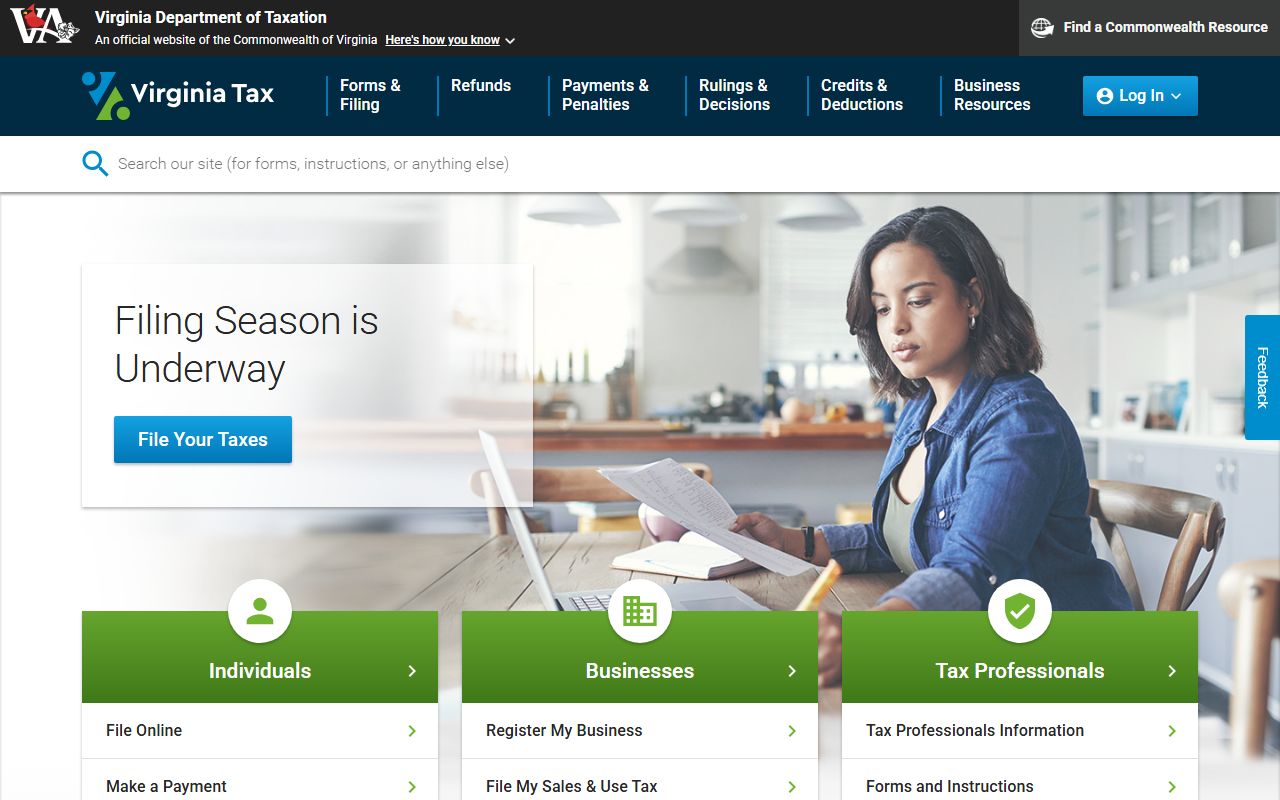
Visit the Department of Taxation website for resources on state assessment rules and the rights available to Virginia property owners.
Tax Relief Programs
Norfolk provides real estate tax relief for elderly and disabled homeowners who meet local income and net worth requirements. Qualifying residents may receive a partial or full reduction in their real estate tax bill, or a deferral of some or all taxes owed. The Commissioner of the Revenue administers these programs and sets the specific eligibility limits for the city each year.
To apply, contact the Commissioner's office. You will need to bring income records for all members of your household, documentation of any qualifying disability, and proof that the property is your main home. Deadlines are set annually and usually fall in the spring before the tax year begins. Contact the office early to get the application forms and a list of required documents.
Veterans who have been rated 100% permanently and totally disabled by the VA are exempt from real estate taxes on their primary residence under Virginia state law. This benefit is available to qualifying veterans in Norfolk as in any other Virginia locality. Contact the Commissioner's office to start the application and learn what VA documentation is required to confirm the rating.
Virginia's Department of Housing and Community Development runs programs that support homeowners and may offer additional resources for residents facing housing cost challenges.

The DHCD website lists state housing programs that may provide additional financial assistance to qualifying Virginia homeowners.
Land Books and Records Access
Virginia localities must maintain annual land books recording all taxable real property. Norfolk's land books list each parcel, the owner of record, the assessed value, and the taxes owed. These records are public under § 58.1-3331 and can be inspected at the Commissioner's office. Norfolk has a large number of parcels, and the office staff can help locate specific records.
Current assessment records are available through the city's online property portal at norfolk.gov. Search any parcel in the city by address or parcel number to find up-to-date assessment data, owner information, and tax history. The city updates these records after each assessment cycle. Online access is free and open to anyone.
For historical records, the Library of Virginia in Richmond holds older Norfolk land books and related tax records going back well into the 1800s. Norfolk's Circuit Court Clerk's office also has deed books, plats, and other land records that span many decades. These are useful for title research and genealogical work on properties with long ownership histories.
Certified copies of assessment records or tax statements can be obtained from the Commissioner's or Treasurer's office. Fees may apply for printed or certified documents. Staff can confirm current pricing and expected processing times when you call or visit. For many purposes, the free data available online from the city's portal is sufficient.
Neighboring Cities
Norfolk is an independent city in the Hampton Roads region, bordered by other independent cities rather than counties. Each neighboring city maintains its own separate property tax records.
Nearby Cities
Other cities in the Hampton Roads region also have their own property tax offices and assessment records.