
Hampton Property Tax Records
Hampton is one of the larger independent cities in Virginia and a major part of the Hampton Roads metropolitan area. Property tax records for all parcels within Hampton city limits are maintained by the city's Commissioner of the Revenue, who handles assessments, and the Treasurer, who manages billing and collection. This page explains how to find and use Hampton property tax records, how the city's assessment process works, what appeal rights you have, and how to apply for tax relief programs if you qualify.
Hampton Overview
Commissioner of the Revenue
The Commissioner of the Revenue is the elected assessor for all real estate and personal property in the City of Hampton. The commissioner's office maintains the official assessment records for every parcel in the city, including current and prior year assessed values, owner information, property classification, and physical details such as square footage and lot size. All of this data feeds into the tax billing system.
Hampton has a large and diverse real estate market that includes single-family homes, commercial properties, industrial sites, and military-adjacent properties. The commissioner uses sales data from across the city, combined with market trend analysis, to set assessed values. Waterfront properties and those near military installations may have unique valuation characteristics that the commissioner's office accounts for.
In addition to real estate, the commissioner handles personal property tax on vehicles, business license taxes, and machinery and tools taxes. Hampton is a significant business and industrial center, so the commissioner's office processes a large volume of business-related tax filings each year. For individual homeowners, the main contact points are real estate assessment records and vehicle personal property taxes.
The commissioner provides online resources and may have a property search portal on the city's website. Start at hampton.gov to find current office hours, contact information, and any available online tools. Hampton is a larger city with robust city services, so online access to assessment data is more likely than in smaller jurisdictions.
New homeowners in Hampton should confirm that their ownership information is on file with the commissioner's office after closing. This ensures that assessment notices and tax bills go to the correct address from the start. It also means you are in the system for any tax relief programs you may want to apply for in the future.
Hampton Treasurer
The Treasurer collects all city taxes for Hampton, including real estate, personal property, and other local taxes. After the commissioner finalizes assessments, the Treasurer issues tax bills and manages the collection process. Hampton's real estate tax billing follows a semiannual schedule, with payment installments due at specific times during the year. The Treasurer's Office can confirm what is owed on any city parcel, process payments, and provide receipts. See hampton.gov for contact details.
Hampton offers multiple payment options. Online payment is available for residents who prefer to pay by credit card or bank transfer from home. In-person payments are accepted at the Treasurer's Office, and payments by mail are also accepted if you send by the due date. Given the size of the city, the Treasurer's Office is well-staffed and handles a high volume of payments and inquiries each day.
Delinquent taxes in Hampton accrue penalties and interest beginning on the day after the due date. The city has a structured process for collecting delinquent accounts, which can include liens on the property and, in prolonged cases, legal action. If you receive a delinquency notice, contact the Treasurer as soon as possible. The office can explain exactly what is owed and what steps you need to take to resolve the account.
How to Search Hampton Property Tax Records
Hampton property tax records are public records. The city's website at hampton.gov is the best starting point. Hampton may provide an online property search tool where you can look up assessed values, owner information, and tax status by address or parcel number. Online access is common in larger Virginia cities and can save you a trip to City Hall for basic inquiries.
For detailed records, historical data, or information about specific billing history, contact the Commissioner of the Revenue or the Treasurer directly. Staff can search the city's records and provide detailed printouts. Most requests for individual property records are handled quickly, often the same day you call or visit.
Hampton's size means there are many parcels and a correspondingly large volume of records. Having the address or parcel number ready when you contact the offices speeds up the search. For title searches involving Hampton properties, the Hampton Circuit Court Clerk's office records all deeds and property documents within city limits. Check both the commissioner's records and the circuit court for a complete property history.
Assessment Process
Virginia law requires all real property to be assessed at 100% of fair market value, as established in Chapter 32 of Title 58.1. Under Section 58.1-3301, the assessment date is January 1 of each tax year. Hampton's commissioner follows these rules when valuing all real estate in the city. With a large and active real estate market, keeping values current requires ongoing analysis of sales data and market trends.
Hampton conducts regular general reassessments to keep assessed values aligned with market values. The city uses a mass appraisal methodology, which analyzes sales of comparable properties across neighborhoods to set values for all properties in similar categories. This process is more systematic than individual appraisals but follows the same valuation principles. When a reassessment is completed, all property owners receive new assessment notices.
If you believe your assessed value is too high, start with an informal appeal to the Commissioner of the Revenue under Section 58.1-3330. You can request this review shortly after receiving your assessment notice. Bring documentation of comparable sales or an independent appraisal if you have one. The commissioner can lower the value at this stage without a formal hearing if your evidence is convincing.
If the informal review does not resolve the dispute, file a formal appeal with the Board of Equalization under Section 58.1-3331. The board is an independent body that hears evidence from both sides and issues a written decision. For high-value properties, preparing carefully for a board hearing can be worth significant money in tax savings if successful.
After the board, you can appeal to the circuit court under Section 58.1-3332. This is a formal legal process with filing requirements and deadlines. For most residential property appeals, the informal review and board levels are where disputes are resolved.
The Virginia Department of Taxation monitors Hampton's assessment practices as part of its statewide oversight role.
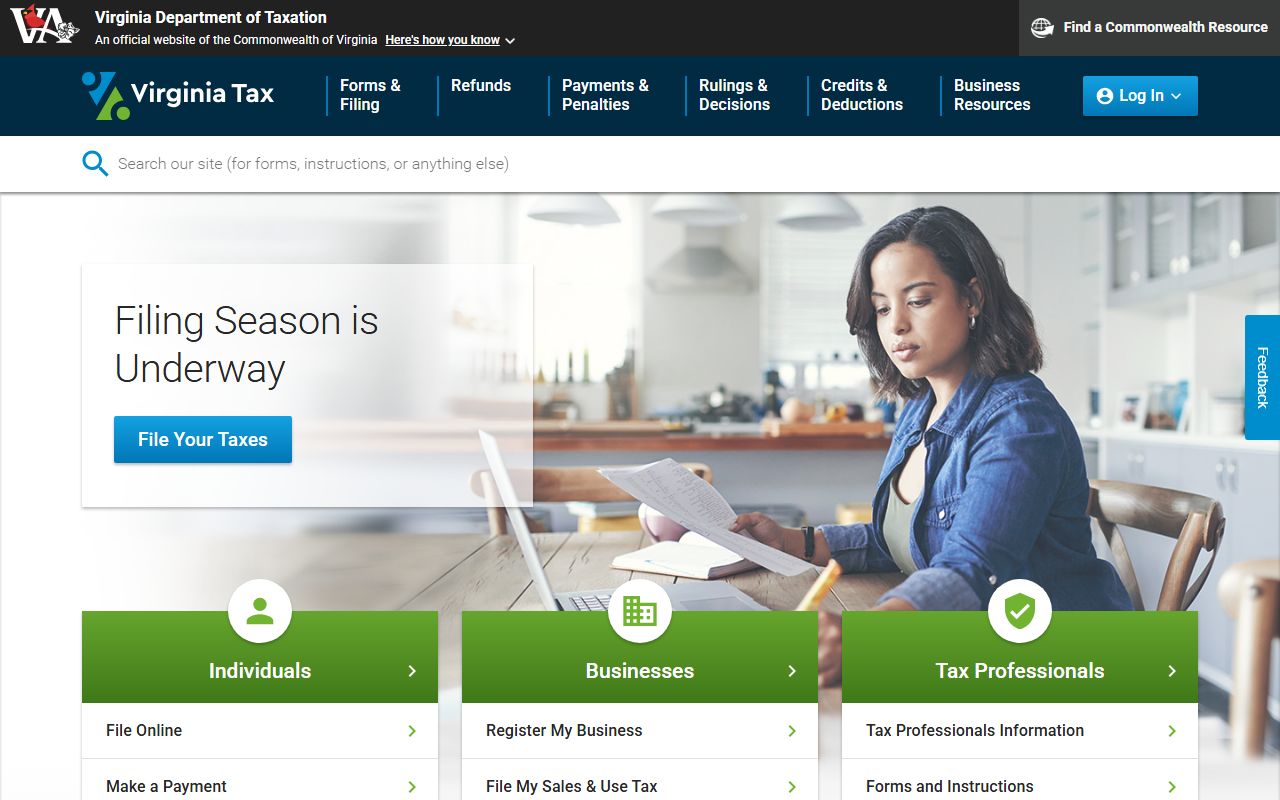
Virginia Tax's assessment ratio studies ensure Hampton assessments stay at or near 100% of market value as required by state law.
Tax Relief Programs
Hampton offers real estate tax relief programs for eligible elderly and disabled homeowners. These programs are authorized by Virginia Code Section 58.1-3210, which allows localities to exempt or defer real estate taxes for qualifying owners. Hampton sets its own income and net worth thresholds through city ordinance. The commissioner's office administers the program and can tell you the current limits and application process.
To apply, you need to show that you own and occupy the property as your primary home, meet the age or disability requirement (age 65 or older, or permanently and totally disabled), and fall within the income and asset limits. Income documentation, such as a copy of your most recent federal tax return, is typically required. Applications must be submitted by an annual deadline set by the city.
Hampton may also offer a tax freeze for qualifying seniors, which prevents the tax amount from increasing even if the assessed value rises. This type of program is especially valuable in markets where property values are growing. Ask the commissioner's office specifically whether Hampton has a freeze option and how it compares to the exemption or deferral options.
Veterans with service-connected disabilities may also qualify for partial real estate tax exemptions under Virginia law. Ask the commissioner's office about any veteran-specific relief programs available in Hampton.
Virginia's Department of Housing and Community Development manages additional statewide programs that may supplement local tax relief.

DHCD statewide programs can provide additional housing assistance to Hampton homeowners who qualify based on income or other criteria.
Land Books and Records Access
Hampton's land book is the official public record of all taxable real property in the city. It is maintained by the Commissioner of the Revenue under the requirements of Section 58.1-3378, which requires the land book to be kept current and available for public inspection. The land book lists every parcel with its owner, assessed value, and property details.
You can inspect the land book at the Commissioner of the Revenue's office. For a city the size of Hampton, the land book is a large document, but staff can locate any individual parcel record quickly using the city's computer systems. Copies of specific records are available on request. If you need data on a large number of parcels, ask whether bulk data exports are available and what the cost might be.
Deed recording for Hampton is handled at the Hampton Circuit Court Clerk's office, which maintains all real estate conveyance documents for the city. Combining the commissioner's assessment records with the circuit court's deed records provides a complete picture of any parcel's ownership and value history. Both are public and accessible to anyone under Virginia law.
Hampton may also maintain GIS-based parcel maps with online access. These mapping tools can show parcel boundaries, ownership, assessed values, and zoning information. Check the city's website or contact the city's planning department to ask about GIS data availability. Digital mapping resources can be very useful for property research, especially when you need to understand a parcel's boundaries or location relative to other parcels.
Surrounding County
Hampton is adjacent to York County, which maintains its own property tax records for county parcels outside Hampton city limits.
Nearby Cities
These nearby Hampton Roads independent cities each maintain their own property tax records offices.