
Covington, Virginia Property Tax Records
Covington property tax records are kept by two elected city officials: the Commissioner of the Revenue, who handles all real and personal property assessments, and the Treasurer, who collects taxes and manages payment accounts. Covington is an independent city in the Alleghany Highlands region of western Virginia, surrounded by Alleghany County but separate from it under state law. All property tax functions are managed at the city level through offices accessible via the city's website at covington.va.us. Property owners and researchers can contact either department directly for assessment data, tax status, and relief program information.
Covington Overview
Commissioner of the Revenue
The Covington Commissioner of the Revenue assesses all real property and personal property within the city at 100% of fair market value as required under Virginia Code Chapter 32. This office maintains the official record of each taxable parcel in the city, documenting the owner's name, parcel number, land description, assessed land value, improvement value, and total assessed value. When property changes hands or new construction occurs, the Commissioner updates those records based on deed filings and permit information.
Covington is a small city, and the Commissioner's office reflects that scale. With fewer parcels to manage than a larger Virginia city, staff often have detailed knowledge of specific neighborhoods and property types within the city. Residents with questions about how their property was valued can usually get a straightforward explanation from the office directly. For a small city, the Commissioner's office is often the most efficient place to start any property tax inquiry.
Under § 58.1-3330, Covington must notify property owners when assessments change by more than a threshold set by state law. If you receive such a notice and think the new value is wrong, contact the Commissioner's office to review the appraisal card for your parcel. Under § 58.1-3332, you have the right to inspect that card. It contains the specific property characteristics used to calculate your assessed value, including lot size, building square footage, year built, construction type, and condition. Errors in the card can sometimes be corrected informally without going through a formal appeal.
When informal review doesn't resolve a dispute, the Board of Equalization is the formal option. Under § 58.1-3378, Covington must maintain a Board of Equalization that can hear assessment challenges and order adjustments. The board operates independently from the Commissioner and follows hearing procedures prescribed in § 58.1-3379. Annual filing deadlines apply, so confirm the current dates with the Commissioner's office after you receive your assessment notice.
Covington Treasurer
The Covington Treasurer collects real estate taxes based on values set by the Commissioner of the Revenue. The Treasurer's office calculates tax bills using the city's current rate applied to each parcel's assessed value, then issues and processes those bills. Payment options typically include in-person payments at the Treasurer's office and payment by mail. Check the city website at covington.va.us for current due dates and payment options the city currently offers.
The Treasurer maintains payment records for every parcel and manages delinquent accounts. Real estate taxes that go unpaid become a lien on the property under Virginia law. That lien transfers with the property, meaning a buyer picks up the tax debt if it's not resolved before closing. Before you buy real estate in Covington, confirm the tax status of the parcel with the Treasurer's office to avoid inheriting someone else's unpaid bills.
If you receive a tax bill and believe the amount is wrong, the Treasurer can explain how the bill was calculated using the assessed value and current rate. If you believe the assessment itself is wrong, that question goes back to the Commissioner. The two offices work together, but the starting point for any assessment-related dispute is always the Commissioner of the Revenue.
How to Search Covington Property Tax Records
Check the city's official website at covington.va.us for any online access to property assessment data. Some small Virginia independent cities provide public portals through their assessment software vendor that allow parcel searches by address, owner name, or parcel number. If Covington has such a portal, the Commissioner of the Revenue's department page is the best place to find it.
Under Virginia Code § 58.1-3331, all assessment records are open to the public for inspection. No reason is needed and you don't have to own property in the city. Walk into the Commissioner's office during business hours and ask to see records for any parcel. Staff can retrieve files at the counter. Copies are available for a small per-page fee.
For larger or more specific data requests, Virginia's FOIA process allows written requests to the city. The city must respond within five working days. For most routine property record lookups in a smaller city like Covington, a direct visit or phone call is typically the most efficient route. Staff can often handle requests the same day they are made.
Assessment Process
Under Virginia Code § 58.1-3301, all real property must be assessed at 100% of fair market value. Covington carries out general reassessments on a cycle set by the city rather than annually. During a general reassessment, the Commissioner revalues all parcels based on current market conditions and recent sales. Between reassessments, values hold steady unless a property changes hands, undergoes construction, or requires a data correction.
The mass appraisal methods used in Covington follow the same general approach used elsewhere in Virginia. Statistical models based on sales data help estimate values across groups of similar properties. For a smaller city, the number of recent arm's length sales to draw from may be limited, which can make the Commissioner's job more challenging when markets are thin. In such cases, the office may rely more heavily on cost-based approaches for some property types.
Covington's real estate market includes a mix of modest residential homes, some commercial properties along the main corridors, and properties with industrial or mill-related history. Each type has different value drivers, and the Commissioner's office must account for those differences when setting assessments. The assessed value of any parcel is meant to reflect what a willing buyer would pay a willing seller in a fair market transaction.
Under § 58.1-3332, your right to inspect your appraisal card gives you the best starting point for checking whether your assessed value is based on accurate data. Board of Equalization hearings under § 58.1-3378 are available when the informal process doesn't resolve your concerns.
The Virginia Department of Taxation at tax.virginia.gov provides oversight guidance and assessment standards that Covington's Commissioner must follow.
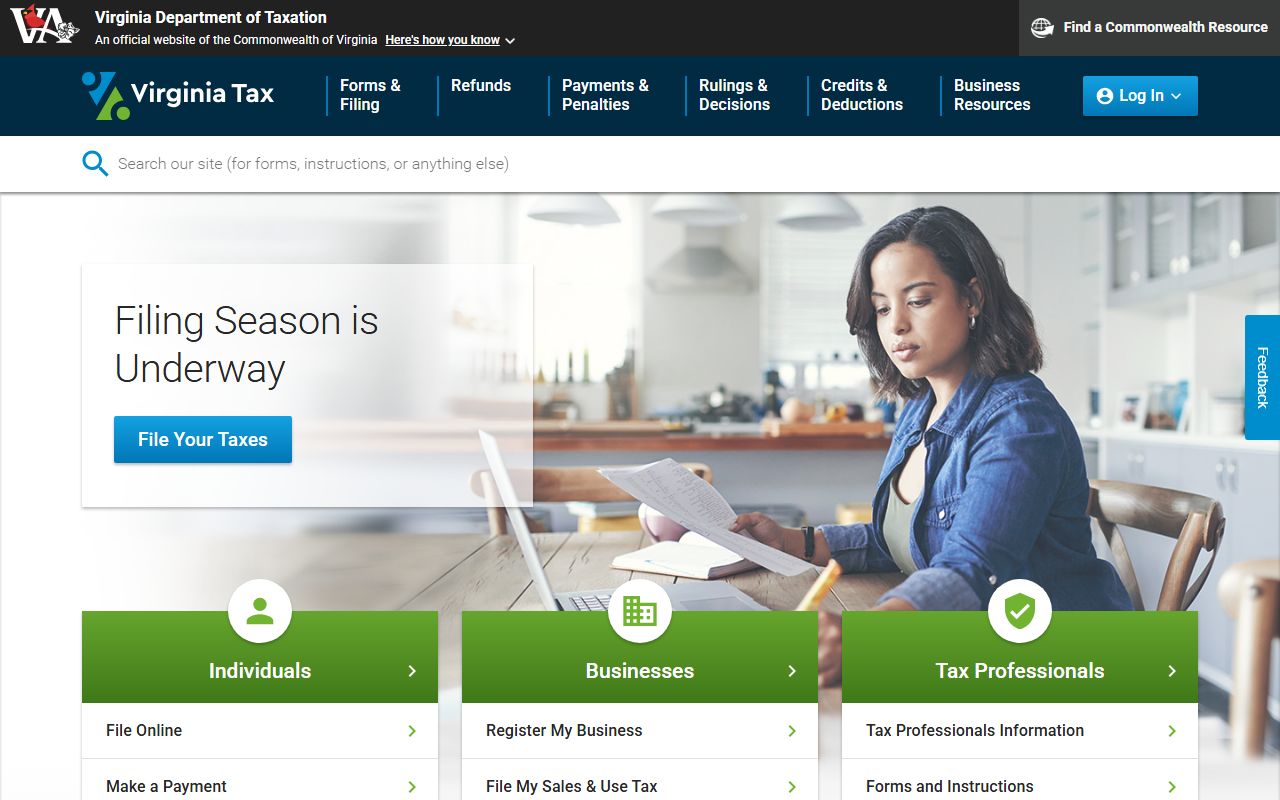
Virginia's statewide assessment standards, enforced by the Department of Taxation, apply equally to Covington and all other Virginia jurisdictions.
Tax Relief Programs
Covington provides real estate tax relief for elderly and disabled property owners under Virginia Code Chapter 32. To qualify, you must be at least 65 years old or permanently and totally disabled, own and occupy the home as your primary residence, and meet the income and net worth thresholds the city has set. The Commissioner of the Revenue handles applications and can give you the current eligibility limits. In smaller cities like Covington, the process is often simpler than in large jurisdictions.
Totally disabled veterans with documentation from the U.S. Department of Veterans Affairs may qualify for a full exemption from real estate taxes on their primary residence. Surviving spouses of veterans who died in service or from service-connected disabilities are also eligible. These exemptions are grounded in state law and administered locally by the Commissioner.
The Virginia Department of Housing and Community Development at dhcd.virginia.gov also has programs that may be available to Covington residents who face difficulty meeting housing costs.

DHCD statewide resources can complement the local relief programs available through Covington's Commissioner of the Revenue.
Land Books and Records Access
Under Virginia Code § 58.1-3301, the Commissioner of the Revenue must maintain a land book for Covington that lists all taxable real property, the owner of each parcel, the assessed value, and the tax owed. These land books are public records. Anyone may inspect them at the Commissioner's office during normal business hours without needing an appointment or explaining their purpose.
Assessment records under § 58.1-3331 are fully open to public inspection. This covers assessment rolls, individual parcel files, and the underlying data used to reach each value. In a smaller city like Covington, these records are generally easy to access and staff can locate specific parcels quickly. Copies are available for a small fee.
The Covington Circuit Court clerk's office holds deed records, deeds of trust, plats, and other instruments affecting title to real property in the city. Cross-referencing deed records with the Commissioner's ownership data confirms that both offices reflect the same current owner and parcel configuration. The Circuit Court is the starting point for researching a property's full chain of title.
Older historical records may be available at the Library of Virginia in Richmond. Covington's records as an independent city go back many decades, and some older documents may not be retained locally. The Library of Virginia can help identify whether records from earlier periods exist and in what format they are available.
Surrounding County
Covington is an independent city surrounded by Alleghany County, which maintains its own separate Commissioner of the Revenue and Treasurer offices.
Nearby Cities
Other independent cities in the region with their own property tax record offices include the following.