
Westmoreland County Property Tax Records
Westmoreland County property tax records are kept by the Commissioner of the Revenue and the Treasurer, both based in Montross on Virginia's Northern Neck peninsula. These offices handle real property assessments and tax collections for the county, with records available to the public through county offices or any online search tools provided by the county. Each parcel record includes the owner's name, a parcel identification number, and separate assessed values for land and any improvements. Property owners, buyers, and title researchers can search Westmoreland County property tax records at the county offices during regular business hours.
Westmoreland County Overview
Commissioner of the Revenue
The Westmoreland County Commissioner of the Revenue assesses all real property in the county at fair market value. This is required under Virginia Code § 58.1-3200. Westmoreland County is a Northern Neck county bordered by the Potomac River and the Rappahannock River, and its property base includes a wide range of waterfront parcels, rural farmland, forested tracts, and residential properties in smaller communities.
The Commissioner maintains a record for each parcel that identifies the owner, parcel identification number, legal description, and separate values for land and improvements. Assessment history is also part of the file. When property changes hands, the deed recorded at the Circuit Court clerk's office in Montross prompts a record update in the Commissioner's office. New construction and significant improvements are also reviewed and reflected in updated assessments as they occur.
The Commissioner's office is located in Montross and operates Monday through Friday during regular business hours. If you have questions about how your property was assessed, staff can review your appraisal card with you and explain the data and methods used. Resolving a data error at this stage is usually faster than pursuing a formal appeal and often produces the same result.
Under § 58.1-3330, owners must be notified in writing when their assessment increases above a certain level. If you receive a notice, contact the Commissioner's office to understand the basis for the change and determine whether the underlying data is accurate.
The Virginia Department of Taxation maintains statewide guidance on assessment standards at tax.virginia.gov. That site is a useful reference before you contact the local office directly.
Westmoreland County Treasurer
The Westmoreland County Treasurer is responsible for collecting real estate and personal property taxes based on assessments certified by the Commissioner of the Revenue. The Treasurer accepts payments in person at the Montross office, by mail, and online where those services are offered. The office handles delinquent collections and provides tax status letters for individual parcels on request.
Tax bills go out on the county's established billing schedule. The amount due reflects the assessed value set by the Commissioner as of the assessment date. If you believe your bill is incorrect, the Commissioner's office is the place to start. The Treasurer can only collect what has been certified. Any reduction in the amount owed requires the Commissioner to authorize a corrected assessment value first.
Under Virginia law, unpaid real estate taxes become a lien on the property. Anyone buying real estate in Westmoreland County should confirm that taxes are current before closing. Title companies routinely verify this, but buyers can check independently by contacting the Treasurer's office directly. The office can provide a written statement of the current tax balance and any outstanding delinquencies for any parcel in the county.
Northern Neck properties, especially waterfront parcels on the Potomac or Rappahannock, tend to carry higher assessed values, which means higher tax bills. If you have questions about whether your bill reflects the correct assessed value, start with the Commissioner, not the Treasurer. The Treasurer's office can be reached through the county site at westmoreland-county.org.
How to Search Westmoreland County Property Tax Records
The first step is checking the Westmoreland County official website for any active online property search portal. Some Virginia counties use assessment software vendors that offer public access to parcel data, allowing searches by owner name, parcel number, or address. If such a portal is listed on the county site, that is the quickest way to look up basic assessment data without making a trip to Montross.
If no online portal is available, or if you need documents or data beyond what a portal provides, you can visit the Commissioner of the Revenue's office in person. Under Virginia Code § 58.1-3331, assessment records in Virginia are open to the public. No reason is required. Staff at the counter can pull up any parcel's record and provide paper or electronic copies. Fees for copies are generally modest.
Virginia's Freedom of Information Act applies to tax assessment records. If you need records for multiple parcels or in a bulk data format, a written FOIA request to the county administrator's office in Montross is the right approach. The county has five business days to respond, with possible extensions for complex or voluminous requests. For individual parcel lookups, a counter visit is typically faster than FOIA.
The Westmoreland County Circuit Court clerk's office holds deeds, plats, and other recorded instruments affecting real property in the county. Cross-referencing deed records with assessment data from the Commissioner gives you the most complete view of a parcel's legal description, ownership chain, and tax history. The clerk's office is also in Montross and can be accessed through the county's main website.
Assessment Process
All real property in Virginia must be assessed at 100% of fair market value under § 58.1-3200. Westmoreland County's Commissioner of the Revenue uses mass appraisal methods to set values across the county. The Northern Neck's diverse property landscape presents some valuation challenges, particularly for waterfront lots on the Potomac and Rappahannock rivers and for farm and timber properties in the inland portions of the county. Different property types are valued using methods best suited to their market.
The appraisal card for each parcel records lot size, building area, construction type, year built, number of rooms, and any additional improvements such as docks, garages, or agricultural structures. Under § 58.1-3332, every property owner can inspect their own appraisal card. If the data on the card is wrong, such as showing incorrect acreage or an improvement that was demolished, you can raise the issue at the Commissioner's office. Correcting the record may lead to a revised assessment without a formal appeal.
If you disagree with the assessed value and cannot resolve the matter with the Commissioner, you can appeal to the Board of Equalization. Under § 58.1-3378, every county must appoint an independent board to hear these cases. The board can reduce, increase, or confirm the value. Hearing procedures are set out in § 58.1-3379.
The Virginia Department of Taxation oversees local assessment practices and publishes guidance that local commissioners follow. The department's website is shown below.
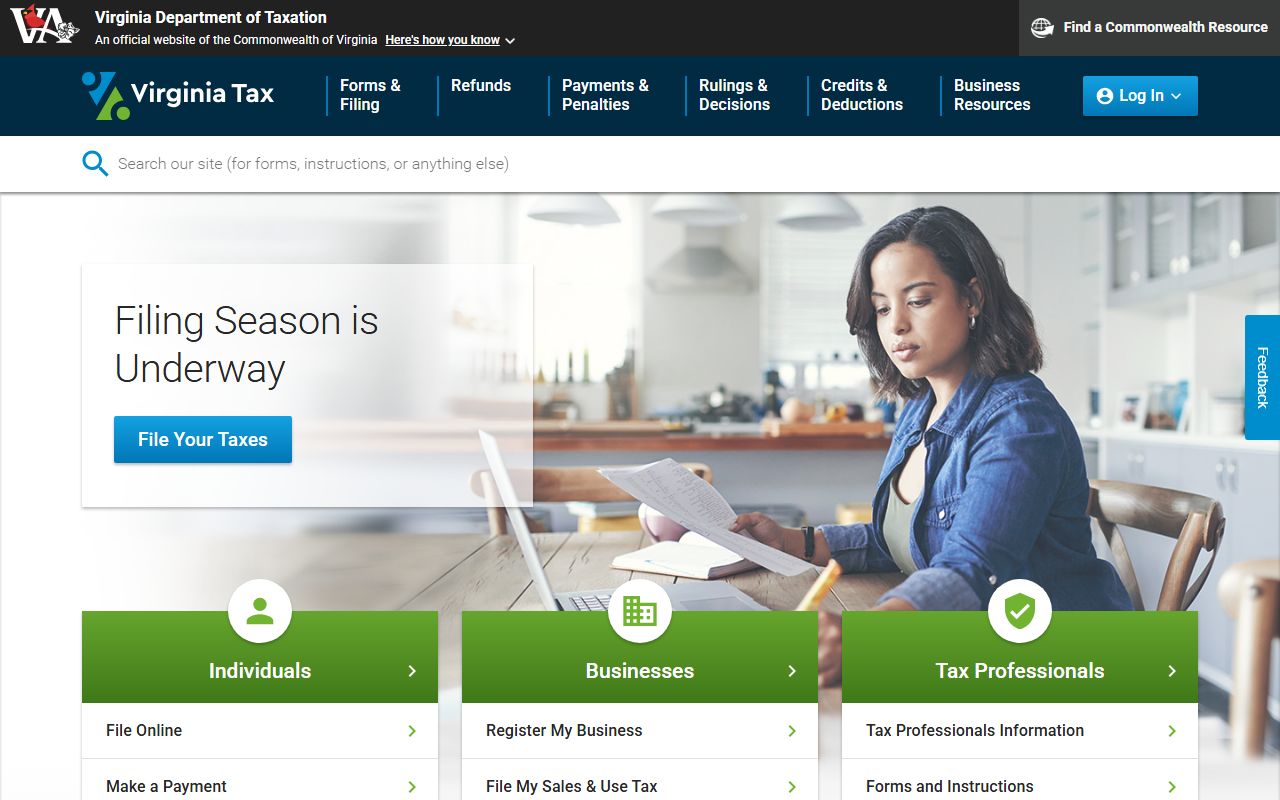
The Virginia Department of Taxation sets uniform assessment standards applicable to all local commissioners throughout the state, including Westmoreland County.
Tax Relief Programs
Westmoreland County offers tax relief for eligible elderly and disabled property owners under Virginia Code § 58.1-3210. To qualify, you must meet the age or disability criteria, own and occupy the home as your primary residence, and fall within the income and net worth limits the county establishes each year. Those limits are subject to change, so contact the Commissioner of the Revenue for current figures before applying.
Veterans with a total and permanent service-connected disability, and surviving spouses of service members killed in action, may be eligible for a complete real estate tax exemption on their primary residence under § 58.1-3219.5. A disability rating letter from the U.S. Department of Veterans Affairs is required. The Commissioner's office in Montross processes these applications and can tell you what documentation to bring.
The Virginia Department of Housing and Community Development at dhcd.virginia.gov administers state housing assistance programs that may supplement what Westmoreland County offers locally. Property owners who are struggling with taxes should look into both county programs through the Commissioner and any state programs DHCD offers.
The image below shows the DHCD website, which coordinates housing assistance and tax relief resources available to Virginia residents across the state.

DHCD resources can add to the relief options available to qualifying Westmoreland County property owners.
Land Books and Records Access
Under Virginia Code § 58.1-3301, each county commissioner must keep a land book listing every taxable parcel with the owner's name, assessed value, and tax due. Westmoreland County's land books are public records. You can inspect them at the Commissioner's office in Montross during regular business hours without providing a reason for your request.
Land books serve as a snapshot of property ownership and tax obligations at a point in time. Title examiners, attorneys, and researchers use them along with deed records to trace ownership chains, verify tax history, and confirm that obligations were met. Older land books from prior years may be kept at the county courthouse or archived at the Library of Virginia, which holds a comprehensive collection of historical Virginia government records.
Assessment records are open under § 58.1-3331 to anyone who asks. Staff at the Commissioner's office can retrieve records for any parcel quickly, and copies are available for a standard per-page fee. For bulk data or records in a specific format, a written FOIA request to the county administrator's office is the appropriate channel.
The Westmoreland County Circuit Court clerk's office holds recorded deeds, subdivision plats, and other instruments affecting land title in the county. Using the clerk's records alongside assessment files gives a thorough picture of any parcel's ownership history, legal description, and tax status over time. Both offices are in Montross and can be reached through westmoreland-county.org.
Cities in Westmoreland County
Westmoreland County does not contain any independent cities. The county seat is Montross, which operates as a town under Virginia law.
Nearby Counties
Westmoreland County is located on Virginia's Northern Neck peninsula. Use the links below to find property tax record information for adjacent counties.