
Northampton County Property Tax Records
Northampton County property tax records are maintained by the Commissioner of the Revenue and the Treasurer, both based in Eastville on Virginia's Eastern Shore peninsula. These offices hold assessment data, ownership information, and tax payment history for all taxable real estate in the county, and the public can access those records in person at the courthouse or through resources listed on the county's official website. Each parcel record includes the owner name, parcel identification number, assessed land and improvement values, and a full history of tax payments. Property owners, buyers, and title researchers can look up any parcel in Northampton County without needing to state a reason or show a legal interest in the property.
Northampton County Overview
Commissioner of the Revenue
The Northampton County Commissioner of the Revenue is responsible for assessing all real and personal property in the county at fair market value. This requirement comes from Virginia Code Chapter 32. The Commissioner maintains detailed assessment records for every taxable parcel in Northampton County and also runs local tax relief programs for residents who qualify.
The assessment file for each parcel contains the owner of record, the parcel identification number, legal description, lot size, building details, and the full assessed value history. When ownership changes and a new deed is filed with the Circuit Court, the Commissioner's office updates the property record to reflect the new owner. Significant improvements, demolitions, or changes in land use also trigger updates in the assessment data.
Northampton County is the southern half of Virginia's Eastern Shore, a narrow peninsula that sits between the Chesapeake Bay and the Atlantic Ocean. This unique geography means the county has a significant number of waterfront and near-water parcels, farmland, and rural lots that require specialized valuation approaches. The Commissioner's office is familiar with the types of property found in the county and can explain how specific parcels are valued.
The office is in Eastville and is open weekdays during regular business hours. Call ahead if you have a complex question about your assessment or want to review a set of records, as staff can prepare materials in advance. If you believe your property data has an error, the Commissioner's office is the right place to raise that concern before you file a formal appeal.
Under § 58.1-3330, property owners must be notified when their assessed value rises above a set threshold. If you receive that kind of change notice, contact the Commissioner to understand what drove the increase.
Northampton County Treasurer
The Northampton County Treasurer collects real estate and personal property taxes based on the values assessed by the Commissioner of the Revenue. The Treasurer issues tax bills, processes payments, and pursues collection on delinquent accounts. The Treasurer does not set assessed values and cannot change a tax bill without a corrected assessment from the Commissioner.
Tax bills in Northampton County follow Virginia's standard billing cycle, typically issued in two installments per year. The Treasurer's records show whether taxes are current, overdue, or have gone through collection action for each parcel in the county. This information matters if you are buying property, because delinquent real estate taxes are a lien that runs with the land regardless of who owned it when the taxes went unpaid. Confirm tax status with the Treasurer before closing on any Northampton County property.
Payment options usually include in-person, mail, and online channels if the county's system supports it. Check the county website or call the Treasurer's office to confirm which options are available and what the current due dates are. If you have paid a bill and need written confirmation, the Treasurer can provide a receipt or a letter stating the account is current. Tax receipts can be important for lenders, insurance purposes, or your own records.
How to Search Northampton County Property Tax Records
Start at the county's official website, co.northampton.va.us. Look for links on the Commissioner of the Revenue page or the Treasurer page that point to any online property search tool. Some Virginia localities use third-party assessment platforms that allow you to look up parcels by owner name, address, or parcel number and view current assessed values and tax status without visiting the office.
Under § 58.1-3331, assessment records are open to the public. You can walk into the Commissioner's office in Eastville and ask to see any property record without providing a reason. No legal interest in the property is required. This applies to residents, researchers, title examiners, attorneys, and anyone else who needs to review assessment data. Copies are available for a modest fee.
For larger requests or records in a specific format, you can use Virginia's Freedom of Information Act. Send a written FOIA request to the county administrator's office. The county must respond within five business days and must tell you the cost, if any, before fulfilling the request. Most routine requests for property assessment data are completed quickly without requiring a formal FOIA process.
The Circuit Court clerk's office in Eastville maintains deed records, plats, and land records going back many years. These pair well with assessment data when you need to trace ownership history or verify a legal description. Both offices are accessible to the public and can often answer questions by phone, which can save you a trip if your question is straightforward.
Assessment Process
All real property in Virginia must be assessed at 100% of fair market value under Title 58.1, Chapter 32 of the Virginia Code. Northampton County follows this requirement. The Commissioner uses mass appraisal methods to value all parcels on a consistent basis, which involves applying market data and valuation models to groups of properties rather than conducting individual appraisals each year.
Eastern Shore properties often present distinct valuation challenges. Waterfront lots on the Chesapeake Bay or the barrier islands can be significantly more valuable than similar-sized inland parcels. Agricultural land used for vegetable farming, which is common on the Eastern Shore, is valued differently from residential or commercial land. Parcels subject to tidal flooding or conservation easements also require specific treatment. The Commissioner's office has experience with all of these property types and can explain how each is handled.
The appraisal card for each parcel shows what data the office used to set the assessed value. Under § 58.1-3332, you have the right to see your card and check the data for accuracy. If the card shows the wrong number of rooms, incorrect lot size, or a structure that no longer exists, ask the Commissioner to update the record. A data correction can sometimes resolve a dispute without needing to file an appeal.
When a data correction isn't enough and you still believe the assessed value is too high, appeal to the Board of Equalization. Under § 58.1-3378, Virginia counties must have a Board of Equalization to hear these appeals. The board is independent from the Commissioner's office and can change, leave unchanged, or increase an assessed value based on the evidence you present. Hearing procedures are governed by § 58.1-3379. Comparable sales or an independent appraisal make the strongest case.
The following screenshot shows the Virginia Department of Taxation website, which provides statewide guidance on property tax assessment standards in Virginia.
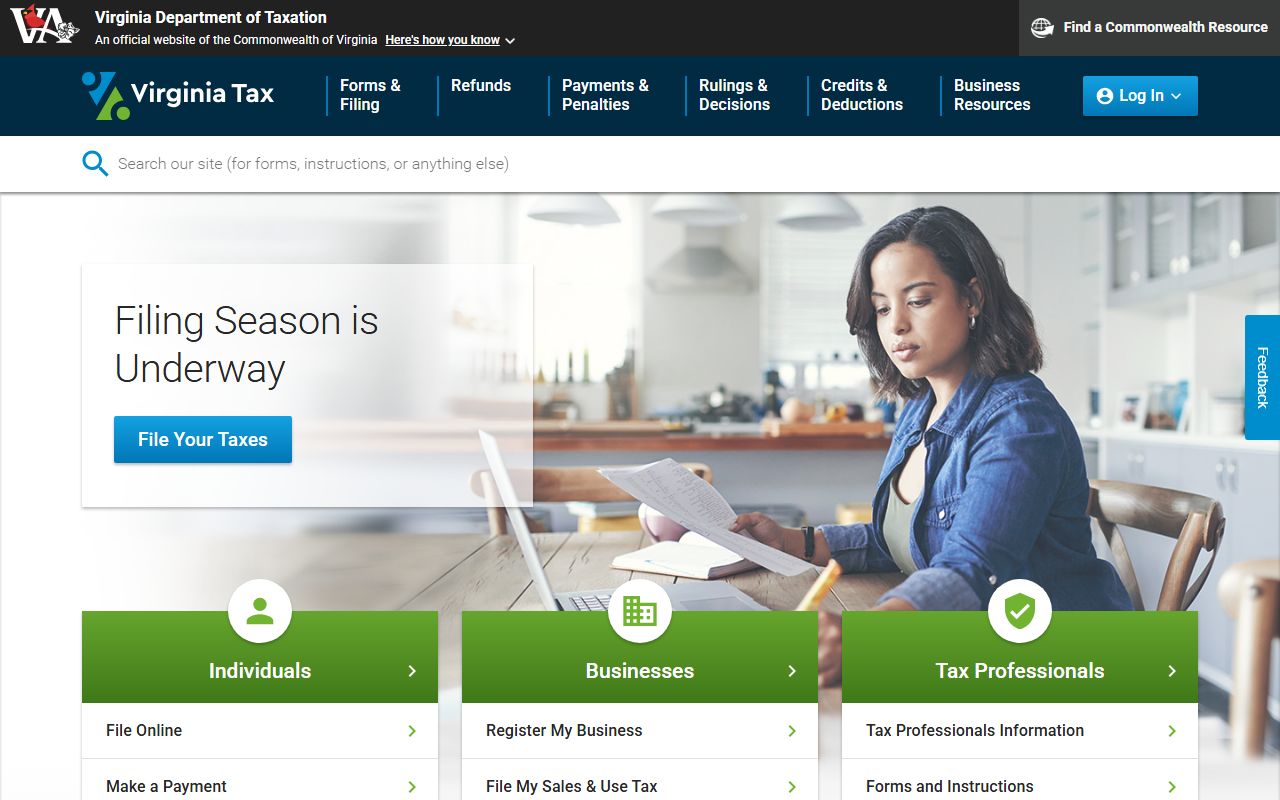
The Virginia Department of Taxation sets uniform standards that all local commissioners must follow when assessing real property across the state.
Tax Relief Programs
Northampton County provides tax relief for elderly and disabled property owners under Virginia Code § 58.1-3210. To qualify, you must meet age or disability requirements set by state law, own and occupy the property as your primary residence, and have income and net worth within the limits set by the county board. These limits are reviewed periodically, so check with the Commissioner's office for the figures that apply in the current tax year.
Veterans with total and permanent service-connected disabilities are eligible for a full real estate tax exemption on their primary home under § 58.1-3219.5. You need a certification of disability from the U.S. Department of Veterans Affairs to apply. Surviving spouses of veterans killed in action or who died from a service-connected cause may also qualify for this exemption. The Commissioner's office processes applications for this program and can explain what documentation is needed.
Northampton County's rural character means some property owners may qualify for land use tax programs that assess qualifying farmland, forestland, or open space at its use value rather than full market value, under § 58.1-3301. This can produce a meaningful reduction in the tax bill for owners of large rural tracts. Ask the Commissioner's office whether any of your land qualifies and what the application process involves.
The image below shows the Virginia Department of Housing and Community Development website, which coordinates housing assistance and certain tax relief resources for Virginia residents.

DHCD programs can supplement local relief options for Northampton County property owners who meet eligibility requirements.
Land Books and Records Access
Under Virginia Code § 58.1-3301, every county commissioner must keep a land book that records each taxable parcel, its owner, the assessed value, and the tax owed. Northampton County's land books are public records and can be reviewed at the Commissioner's office in Eastville. These records are useful for confirming ownership and tax status at any given point in time.
Northampton County has some of the oldest land records in Virginia. The county itself has significant historical depth, and older land books and tax records may be available at the Library of Virginia in Richmond for those researching property ownership over long periods. The Library holds records for many Virginia counties and is a key resource for historical property research that goes beyond what local offices typically have on hand.
Under § 58.1-3331, assessment records must be open for public inspection during business hours without any requirement to provide identification or state a reason. Anyone can come into the Commissioner's office and ask to see a property record. If you need a certified copy or want records in a specific format, ask the staff. Copy fees are typically low and set by the county board.
The Circuit Court clerk's office in Eastville holds deed records, plats, surveys, and other instruments recorded against property in Northampton County. Combining deed records from the clerk with assessment records from the Commissioner gives you a full picture of a parcel's ownership history and current tax status. Both offices are in Eastville and can be contacted by phone during regular business hours.
Cities in Northampton County
Northampton County does not contain any independent cities. The county seat is the Town of Eastville, which is a town rather than an independent city under Virginia law.
Nearby Counties
Northampton County forms the southern tip of Virginia's Eastern Shore peninsula. Its only Virginia land neighbor on the peninsula is Accomack County to the north.