
Search Lee County Property Tax Records
Lee County property tax records are kept by the Commissioner of the Revenue and the Treasurer, both based in Jonesville in far southwestern Virginia. These records cover all taxable real estate in the county, and property owners can access assessment data, owner details, and payment history through county offices or by contacting the relevant offices directly. Each parcel record includes the owner name, parcel identification number, assessed land and improvement values, and tax payment history. Virginia law makes these records open for public inspection, so buyers, title researchers, and the general public can look up any parcel in Lee County without needing a stated reason or legal interest in the property.
Lee County Overview
Commissioner of the Revenue
The Lee County Commissioner of the Revenue is the primary office for real estate assessment records in the county. This office assesses all real property at fair market value, as required under Virginia Code § 58.1-3200. The Commissioner also oversees personal property assessments, keeps detailed records for each parcel, and runs tax relief programs for residents who qualify.
Real estate records maintained by this office include the owner of record, parcel identification number, legal description, land and improvement values, and the property's assessed value history. When a property sells or changes ownership, the deed recorded in the Circuit Court clerk's office triggers an update in the Commissioner's assessment files. If you've recently bought land or a home in Lee County, that update process can take several weeks to reflect in county records.
The Commissioner's office is located at the Lee County government complex in Jonesville. Staff can assist with questions about how your property was assessed and what data was used to set your value. Office hours are generally Monday through Friday during standard business hours, though calling ahead to confirm is a good idea.
Under the notice requirements of § 58.1-3330, the county must notify property owners when assessments change beyond a set threshold. If you receive such a notice, the Commissioner's office is the right starting point for any questions or disputes about the new value.
Virginia's Department of Taxation at tax.virginia.gov provides statewide guidance on how local commissioners operate and what records they must maintain. That resource can help you understand the broader framework before reaching out to the Lee County office directly.
Lee County Treasurer
The Lee County Treasurer collects real estate taxes and personal property taxes based on assessments set by the Commissioner of the Revenue. The Treasurer's office also handles delinquent tax collections and processes payments made by mail, in person, or through any online options the county offers.
Tax bills in Lee County are typically sent twice a year. The Treasurer's records show whether taxes on a given parcel are current, delinquent, or have been subject to collection action. If you are buying property in the county, a title search will include a check with the Treasurer to confirm no outstanding balances exist. Delinquent real estate taxes are a lien on the property. They must be paid before a clean title can transfer to a new owner.
The Treasurer's office can provide tax payment receipts and confirm current tax status on any parcel. If you have questions about the amount on a bill, the first step is to contact the Commissioner's office, since the Treasurer can only adjust bills based on corrections the Commissioner authorizes. The two offices work closely together, but they serve distinct functions under Virginia law.
Lee County is a rural county in the far corner of the state. Residents who can't make it to Jonesville in person may want to call ahead and ask about mailing in requests or using any available online payment tools. Staff can tell you what options exist for your situation.
How to Search Lee County Property Tax Records
To search Lee County property tax records, start with the county's official website at leecova.org. The site provides contact information for both the Commissioner of the Revenue and the Treasurer. Check there for any links to online property search tools or assessment databases that the county may use through a third-party vendor.
Under Virginia Code § 58.1-3331, assessment records are open for public inspection. You do not need to show a reason or have a legal stake in a property to look at its assessment records. You can walk into the Commissioner's office in Jonesville and ask to see data on any parcel in the county. Staff can pull up records at the counter, and copies are typically available for a small per-page fee.
If you need records in bulk or in a specific format, Virginia's Freedom of Information Act gives you the right to submit a written request to the county. FOIA requests should go to the county administrator's office. Responses are generally due within five business days, though the county may ask for an extension when requests are complex or involve large amounts of data.
For parcel identification numbers, legal descriptions, and recorded deeds, the Lee County Circuit Court clerk's office in Jonesville holds the land records that complement tax data. Cross-referencing both offices gives a complete picture of any property in the county.
Assessment Process
Under Virginia Code § 58.1-3200, all real property in Virginia must be assessed at 100% of fair market value. Lee County follows this standard. The Commissioner's office uses mass appraisal methods to set values across the county's mix of agricultural land, timber tracts, residential properties, and commercial parcels. Southwest Virginia land often includes steep terrain and working farms, which require different valuation approaches than urban or suburban properties.
Property characteristics recorded in appraisal files include lot size, building square footage, year built, construction type, number of rooms, and any improvements such as barns, outbuildings, or major renovations. Under § 58.1-3332, property owners have the right to inspect their own appraisal card. That card documents the data the county used to calculate the assessed value. If you think the card contains errors, correcting them can sometimes lead to a revised assessment.
When a property owner disagrees with the assessed value and can't resolve things with the Commissioner's office, the next step is filing an appeal with the Board of Equalization. Under § 58.1-3378, each county must appoint a Board of Equalization to hear such appeals. The board is independent from the Commissioner and can order an assessment reduced, increased, or left unchanged. Hearing procedures are governed by § 58.1-3379.
The following screenshot shows the Virginia Department of Taxation website, which provides statewide guidance on property tax assessment standards in Virginia.
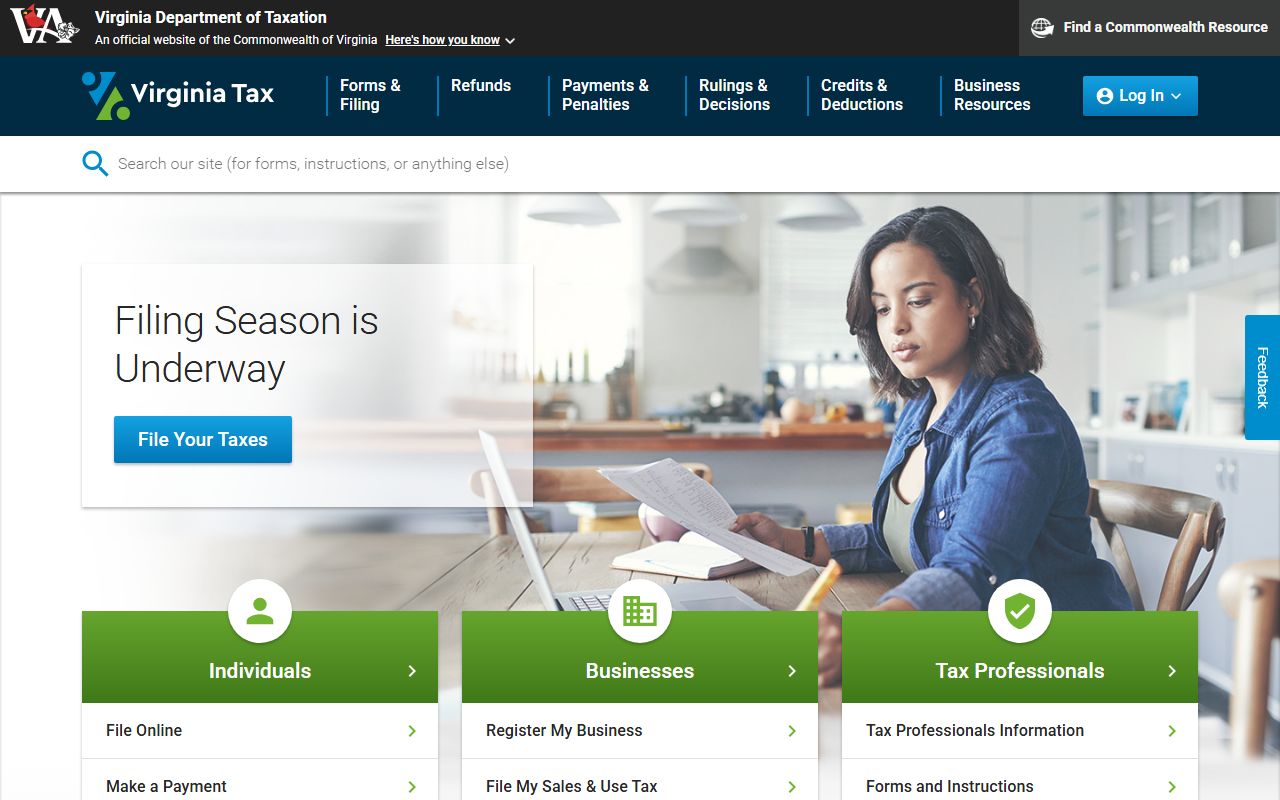
The Virginia Department of Taxation sets uniform standards that all local commissioners must follow when assessing real property across the state.
Tax Relief Programs
Lee County offers tax relief for qualifying elderly and disabled property owners under Virginia Code § 58.1-3210. To qualify, applicants must meet age or disability requirements, own and occupy the property as their primary residence, and fall within income and net worth limits set by the county. The specific thresholds can change from year to year, so check with the Commissioner of the Revenue for current limits.
Disabled veterans and surviving spouses of veterans killed in action may also qualify for a full exemption from real estate taxes under § 58.1-3219.5. This exemption applies to the primary residence and requires certification of total and permanent service-connected disability from the U.S. Department of Veterans Affairs. The Commissioner's office handles applications and can walk you through what documents you'll need to provide.
Lee County, as a rural area with lower incomes than much of the state, may have additional local relief programs or payment plan options for property owners facing hardship. Call the Treasurer's office to ask about any available arrangements before a tax bill becomes delinquent. Acting early gives you more options.
The image below shows the Virginia Department of Housing and Community Development website, which coordinates housing assistance and certain tax relief resources for Virginia residents.

DHCD programs can supplement local relief options for Lee County property owners who meet eligibility requirements.
Land Books and Records Access
Virginia's land book system is one of the oldest public record systems in the country. Under Virginia Code § 58.1-3301, every county commissioner must maintain a land book listing each parcel, its owner, the assessed value, and the tax owed. These land books are public records and can be inspected at the Commissioner's office in Jonesville during business hours.
For Lee County, land books provide a useful record of property ownership and values over time. Researchers, title examiners, and property owners use them to trace ownership history, confirm values, and check tax obligations on specific parcels. Older land books may be held at the county courthouse or at the Library of Virginia in Richmond, which keeps historical Virginia records for the whole state.
Assessment records under § 58.1-3331 are open for inspection without any need to show cause. Anyone, whether they own property in Lee County or not, can ask to see assessment records at the Commissioner's office. Copies are typically available for a per-page fee, and staff can help you find the records you need.
The Lee County Circuit Court clerk's office holds deeds, plats, and other land records that work alongside tax records to give a full picture of any property. Cross-referencing deed records with assessment data shows ownership history, legal descriptions, and the chain of title. The clerk's office is also in Jonesville and can be reached through the county's main website at leecova.org.
Cities in Lee County
Lee County does not contain any independent cities. The county seat is the Town of Jonesville, which is a town rather than an independent city under Virginia law.
Nearby Counties
Lee County borders two other Virginia counties in the far southwestern corner of the state.