
Access Fredericksburg Property Tax Records
Fredericksburg is an independent city in Central Virginia, and its property tax records are managed separately from the surrounding Spotsylvania and Stafford counties. The city's Commissioner of the Revenue handles all real estate and personal property assessments, while the Treasurer manages billing and collection. This page explains how to find and use Fredericksburg property tax records, how the assessment and appeals process works, what relief programs are available, and how to access the city's land book and other public records.
Fredericksburg Overview
Commissioner of the Revenue
The Commissioner of the Revenue is Fredericksburg's elected assessor for all real estate and personal property within city limits. The commissioner's office maintains the official assessment records for every parcel in the city, including the owner name, parcel identification number, assessed value, and property classification. These records are the foundation for all property tax billing.
Fredericksburg has seen significant real estate activity in recent years as the area between Richmond and Washington, D.C. has grown. The commissioner tracks market trends and uses sales data to keep assessed values in line with actual market conditions. Assessments are based on fair market value as of January 1 of each tax year. Owners receive assessment notices that show current and prior year values along with instructions for filing an appeal.
The commissioner's office also handles personal property tax for vehicles and business equipment registered in Fredericksburg, as well as business license taxes and other local taxes. If you run a business in the city, setting up your tax account starts with this office. For real estate questions, the commissioner can pull up records for any parcel, explain how the value was determined, and walk you through the appeal process if needed.
Contact the commissioner directly at fredericksburgva.gov. The city provides online property search tools and may allow you to look up assessment data without visiting in person. Check the website first to see what self-service options are available.
If you recently bought property in Fredericksburg, make sure the commissioner's records show your name and mailing address. Ownership updates happen when new deeds are recorded, but there can be a lag. Contacting the office directly after closing ensures you get your tax bills without delay.
Fredericksburg Treasurer
The Treasurer collects all property taxes for the City of Fredericksburg. The office receives assessment data from the commissioner, issues tax bills, and processes payments. Real estate taxes in Fredericksburg are billed semiannually. The Treasurer can confirm the amount due on any city parcel, provide payment history, and issue receipts for paid accounts. Reach the office at fredericksburgva.gov.
Fredericksburg provides online payment options. This is convenient for owners who prefer not to mail checks or visit City Hall. Online payment portals typically allow you to look up your account by address or parcel number, see what is owed, and pay by credit card or bank transfer. There may be a processing fee for card payments.
If taxes are not paid by the due date, penalty charges and interest begin to accrue. The Treasurer tracks all delinquent accounts and can initiate collection actions under Virginia law. If you receive a notice from the Treasurer about an unpaid balance, respond quickly. The Treasurer's Office can explain exactly what is owed and what your options are for getting current.
How to Search Fredericksburg Property Tax Records
Fredericksburg property tax records are public. The city's website at fredericksburgva.gov is the starting point. The city may offer an online property search tool that lets you look up assessed values, owner information, and tax status by address or parcel number. If online access is available, it is the fastest way to get basic information about a specific property.
For more detailed records or historical data, contact the Commissioner of the Revenue or the Treasurer directly. Staff can search the records database and provide printouts of assessment history, payment history, and ownership information. These in-person or phone requests are handled during regular business hours and are usually completed quickly for individual parcels.
When searching, make sure you have the correct city address. Fredericksburg is surrounded by Spotsylvania and Stafford counties, both of which also have addresses that might say "Fredericksburg" in the mailing address but are actually in the county. For county parcels, you need to contact those counties' offices instead. The city can confirm whether a specific address is inside city limits.
Assessment Process
Virginia law requires all real property to be assessed at 100% of fair market value. The legal basis for this is found in Chapter 32 of Title 58.1 of the Virginia Code. Under Section 58.1-3301, assessments are based on the property's value as of January 1. Fredericksburg's commissioner follows these statewide rules when valuing all real property within city limits.
The commissioner's office uses recent sales data from within Fredericksburg to determine assessed values for residential properties. The city's real estate market reflects its location along the I-95 corridor between Richmond and the Washington metro area, which tends to keep values relatively strong. Commercial property assessments may use income-based approaches in addition to sales comparisons.
Assessment appeals begin with an informal review under Section 58.1-3330. Request this review from the Commissioner of the Revenue after you receive your assessment notice. Bring evidence to support your position, such as a recent appraisal, comparable sales, or documentation of property condition issues that might affect value. The commissioner reviews the evidence and can reduce the assessment if the data warrants it.
If you are not satisfied with the informal review result, file a formal appeal with the Board of Equalization under Section 58.1-3331. The board is independent of the commissioner and holds formal hearings. After the board, you may appeal to the circuit court under Section 58.1-3332 if necessary.
Every step of the appeal process has a deadline. Check the assessment notice carefully for the appeal window. If you miss it, you generally have to wait until the next assessment cycle. The appeal deadlines are set relative to when assessment notices are sent, so act as soon as possible after receiving your notice.
The Virginia Department of Taxation provides statewide oversight of assessment practices and publishes guidance for local assessors.
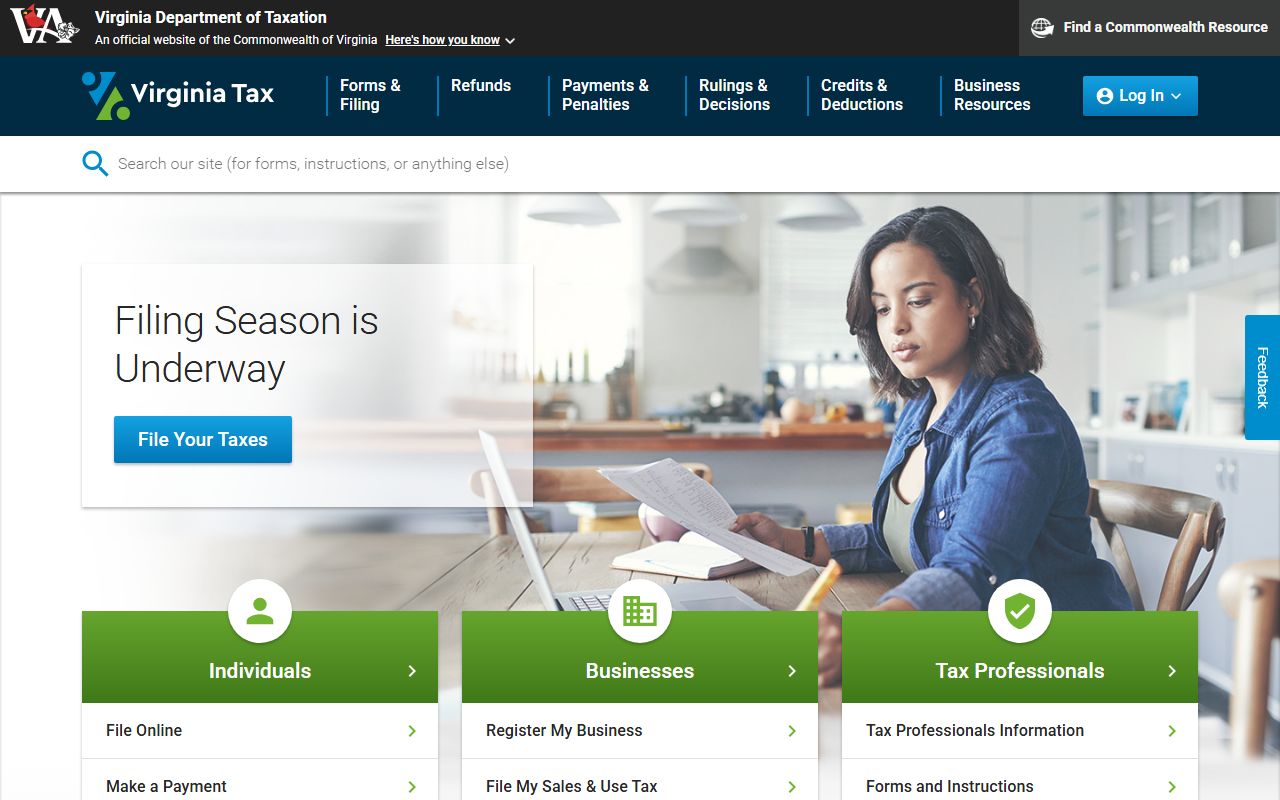
Virginia Tax's assessment ratio program monitors localities to ensure assessments stay at the 100% standard, providing a check on local assessment practices.
Tax Relief Programs
The City of Fredericksburg offers real estate tax relief for elderly and disabled homeowners. The program is authorized by Virginia Code Section 58.1-3210, which allows localities to reduce or defer taxes for qualifying residents. Fredericksburg sets its own income and net worth limits for the program through city ordinance. To find out the current thresholds and apply, contact the Commissioner of the Revenue's office.
To qualify, you generally must own and live in the property as your primary residence, be 65 or older or permanently and totally disabled, and meet the city's income and asset limits. Applications include income verification, which typically means providing a recent federal tax return or equivalent documentation. If you qualify, the exemption or deferral is applied to your tax bill for that year.
Some Virginia localities also offer a tax freeze option for qualifying seniors, which caps the tax amount even as assessments rise. Ask the commissioner's office whether Fredericksburg has a freeze option in addition to the standard exemption and deferral programs. The combination of programs may provide more relief than a single program alone.
Virginia's Department of Housing and Community Development offers statewide housing assistance programs that may provide additional options for Fredericksburg homeowners with lower incomes.

DHCD programs can supplement local tax relief and provide broader housing support for eligible Fredericksburg residents.
Land Books and Records Access
Fredericksburg's land book is the official public record listing all taxable real property in the city. The Commissioner of the Revenue is required by Section 58.1-3378 to maintain the land book and make it available for public inspection. The land book includes owner names, assessed values, parcel sizes, and property classification for every parcel within city limits.
You can inspect the land book at the Commissioner of the Revenue's office during business hours. Copies of individual records are available and can be requested by mail, phone, or in person. For data on multiple parcels or the full city parcel list, ask the staff about bulk data requests. There may be a cost for large data exports, but individual lookups are typically free or very low cost.
Fredericksburg has its own circuit court that handles deed recording for all property transactions within city limits. The Fredericksburg Circuit Court Clerk maintains deed books, plat maps, and other documents that affect title to real property in the city. Searching both the commissioner's records and the circuit court records gives a complete picture of ownership history and value history for any parcel.
The city may also maintain GIS maps showing parcel boundaries and ownership. These can be helpful for visualizing property lines, identifying neighboring parcels, and verifying that a property address falls within city limits rather than in one of the surrounding counties. Contact the city's planning or IT department to ask about GIS data availability.
Surrounding Counties
Fredericksburg is bordered by Spotsylvania County to the south and west and Stafford County to the north. Property just outside city limits falls under those counties' separate tax jurisdictions.
Nearby Cities
These nearby Virginia independent cities also maintain their own separate property tax records.